Christmas outfits for parents and toddlers work best when they look festive without making anyone too hot, uncomfortable, or hard to move. A practical family outfit coordinates colors and textures rather than relying on identical head-to-toe sets, while breathable layers and toddler-safe details keep the look wearable. That balance matters: the American Academy of Pediatrics advises dressing babies and young children in layers suited to the environment and removing extra layers indoors to reduce overheating. Below, you’ll find a simple definition of functional festive dressing, outfit formulas for home, outdoors, and photos, plus fit, fabric, and safety checks to make the season more comfortable.
Functional Christmas Outfits for Parents and Toddlers: Definition and Key Principles
A functional Christmas outfit is festive clothing that suits the day’s activities, temperature, and movement needs while keeping each family member comfortable. There is no single official clothing standard for “family matching”; here, the term means coordinating a shared palette or detail while choosing age-appropriate garments separately. The American Academy of Pediatrics’ guidance on winter clothing emphasizes layers and avoiding excessive bundling indoors. For toddlers, that practical principle matters as much as appearance: clothes should allow walking, sitting, eating, and play without constant adjustment.
Coordinate a palette, not identical outfits
Color coordination means choosing a few related shades—such as evergreen, cream, and burgundy—rather than dressing everyone in the exact same garment. Parents might wear a knit in one color while a toddler wears a check, stripe, or solid in another. This approach creates a unified look in family photos and makes it easier to reuse pieces later. Keep prints simple: one prominent pattern, balanced with solids, usually looks calmer than several competing motifs.
Choose comfort and mobility before the photo
A wearable outfit lets a toddler bend, climb, and sit comfortably, with closures that caregivers can manage during bathroom breaks or diaper changes. Soft waistbands, flexible knits, and familiar shoes are often more practical than stiff formalwear. Parents benefit from the same rule: choose pieces that work for carrying a child, sitting on the floor, and moving between a warm home and cold outdoors. A quick test is to have everyone sit, reach, and walk in their outfit before leaving.
Layered Christmas Outfits for Indoor and Outdoor Plans
Once the outfit is comfortable, build it around the setting. Indoor gatherings, outdoor visits, and winter photo sessions call for different amounts of warmth, but the same strategy applies: use removable layers so the family can adjust when moving between temperatures.
Indoor holiday outfits: breathable base layers
For a heated home, start with a comfortable base layer and add a cardigan, overshirt, or light sweater that can come off. Cotton and other soft, breathable fabrics can feel comfortable for everyday wear; care labels and individual sensitivities should guide fabric choices. Avoid dressing a toddler in multiple heavy layers for a warm room. The AAP’s safe-sleep advice specifically cautions against overheating infants, and its general winter guidance supports adjusting clothing to the environment. For sleep, follow current safe-sleep guidance rather than using decorative holiday clothing or loose accessories.
Outdoor outfits: warm layers that can be removed
For a walk, market, or outdoor tree visit, use a base layer, insulating middle layer, and weather-appropriate outer layer. Hats, mittens, and warm socks help cover exposed areas, while shoes should match the surface and the toddler’s walking ability. The National Weather Service explains that wind chill describes how wind and cold affect exposed skin; check local conditions and shorten outdoor time during severe cold. Remove bulky outerwear before buckling a child into a car seat, because thick padding can compress in a crash and leave the harness too loose. The National Highway Traffic Safety Administration recommends snug harness straps and placing blankets or coats over the secured harness instead.
Photo-ready outfits that still work after pictures
A photo-ready outfit uses one or two polished details—such as a velvet headband for an adult, a plaid shirt, or a textured knit—without sacrificing comfort. Choose colors that suit the location: deeper greens and reds stand out against pale snow, while cream and warm neutrals can complement a decorated indoor room. Take a test photo in similar lighting, then check whether patterns appear busy and whether anyone is squinting or tugging at clothing. Keep decorative pieces removable, especially around young children.
Toddler-Safe Details in Coordinated Christmas Clothing
The most attractive outfit is not a good choice if it creates a snagging, choking, or mobility hazard. Toddlers explore clothing with their hands and mouths, so inspect embellishments and accessories before wearing them. The U.S. Consumer Product Safety Commission advises caregivers to watch for small parts that can present choking hazards and to choose products appropriate for a child’s age.
Check trims, fasteners, and accessories
Before dressing a toddler, check that buttons, bows, sequins, bells, and other decorations are firmly attached and cannot be pulled off easily. Skip long scarves, dangling cords, and jewelry that can catch during play. For shoes, prioritize a secure fit and a sole suited to the floor or outdoor conditions. If an accessory is mainly for a photograph, use it briefly under close supervision and remove it before active play.
Fit and temperature checks for the whole family
Fit should allow free movement without trailing hems, tight necklines, or sleeves that cover the hands. Check a toddler’s comfort after arriving indoors and remove outer layers if the child becomes too warm; the AAP advises caregivers to monitor children’s temperature and avoid overbundling. Adults can use the same comfort check, especially when carrying children or spending time in heated venues. A spare lightweight layer is often more useful than one very thick outfit.
Easy Outfit Formulas for Parents and Toddlers
A repeatable outfit formula reduces last-minute decisions and helps families coordinate without buying a complete matching set. These examples can be adapted to the climate, household traditions, and what is already in the closet.
Cozy at-home gathering
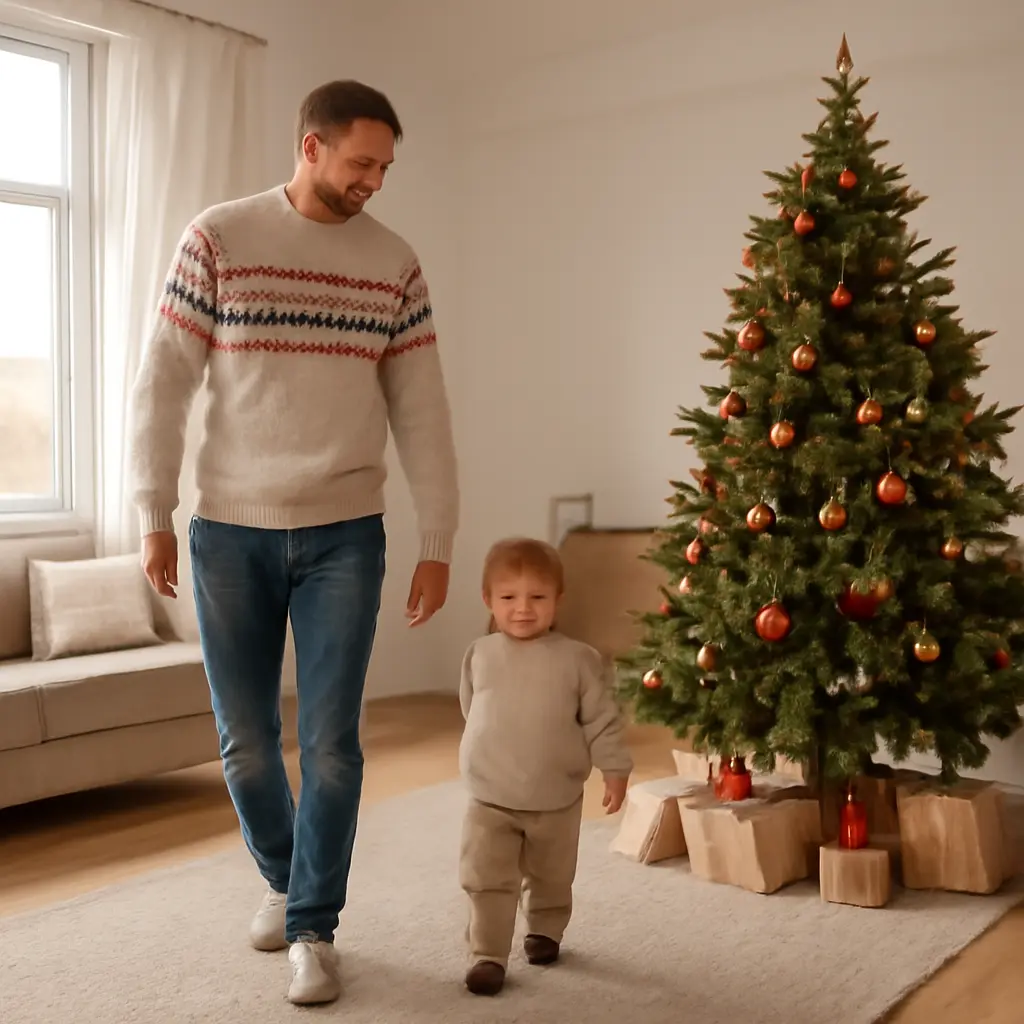
Try a parent’s soft knit with dark jeans, paired with a toddler’s comfortable leggings or pull-on trousers and a festive top in a related shade. Add a cardigan for arrival photos and remove it if the room is warm. This is a useful formula for meals and play because it avoids stiff layers and keeps bathroom changes manageable.
Outdoor visit or winter walk
Coordinate a shared color—such as forest green—across a parent’s hat or sweater and the toddler’s coat or mittens. Add weather-appropriate layers and practical footwear, then remove bulky coats before car-seat harnessing. Keep a spare dry pair of socks or mittens in the bag in case snow or spills make the first pair uncomfortable.
Holiday photos with everyday pieces
Use a simple palette such as cream, burgundy, and denim, with one patterned item for visual interest. Parents can wear pieces they already own, while a toddler’s outfit can be chosen for easy movement and quick changes. A coordinated accent—matching socks, a small plaid detail, or a shared color—creates connection without requiring identical costumes.
Conclusion: Make Christmas Outfits Festive, Flexible, and Safe
Functional Christmas outfits coordinate color and texture while respecting comfort, temperature, and toddler mobility. Layering helps families adapt between warm rooms and cold weather; simple outfit formulas make dressing easier; and checking small details can reduce avoidable hazards. Before the next gathering, choose a shared palette, test fit and movement, and pack removable layers. For more guidance, consult pediatric winter-clothing advice and current car-seat safety recommendations from trusted public-health and safety organizations.
Sources: American Academy of Pediatrics, “How to Dress a Newborn for the Weather,” HealthyChildren.org, https://www.healthychildren.org/English/ages-stages/baby/diapers-clothing/Pages/Dressing-Your-Newborn-for-All-Types-of-Weather.aspx; American Academy of Pediatrics, “How to Keep Your Sleeping Baby Safe: AAP Policy Explained,” HealthyChildren.org, https://www.healthychildren.org/English/ages-stages/baby/sleep/Pages/a-parents-guide-to-safe-sleep.aspx; National Highway Traffic Safety Administration, “Car Seats and Booster Seats,” https://www.nhtsa.gov/vehicle-safety/car-seats-and-booster-seats; National Weather Service, “Wind Chill,” https://www.weather.gov/safety/cold-wind-chill-chart; U.S. Consumer Product Safety Commission, “Choking Hazards,” https://www.cpsc.gov/Safety-Education/Safety-Guides/Toys/Choking-Hazards