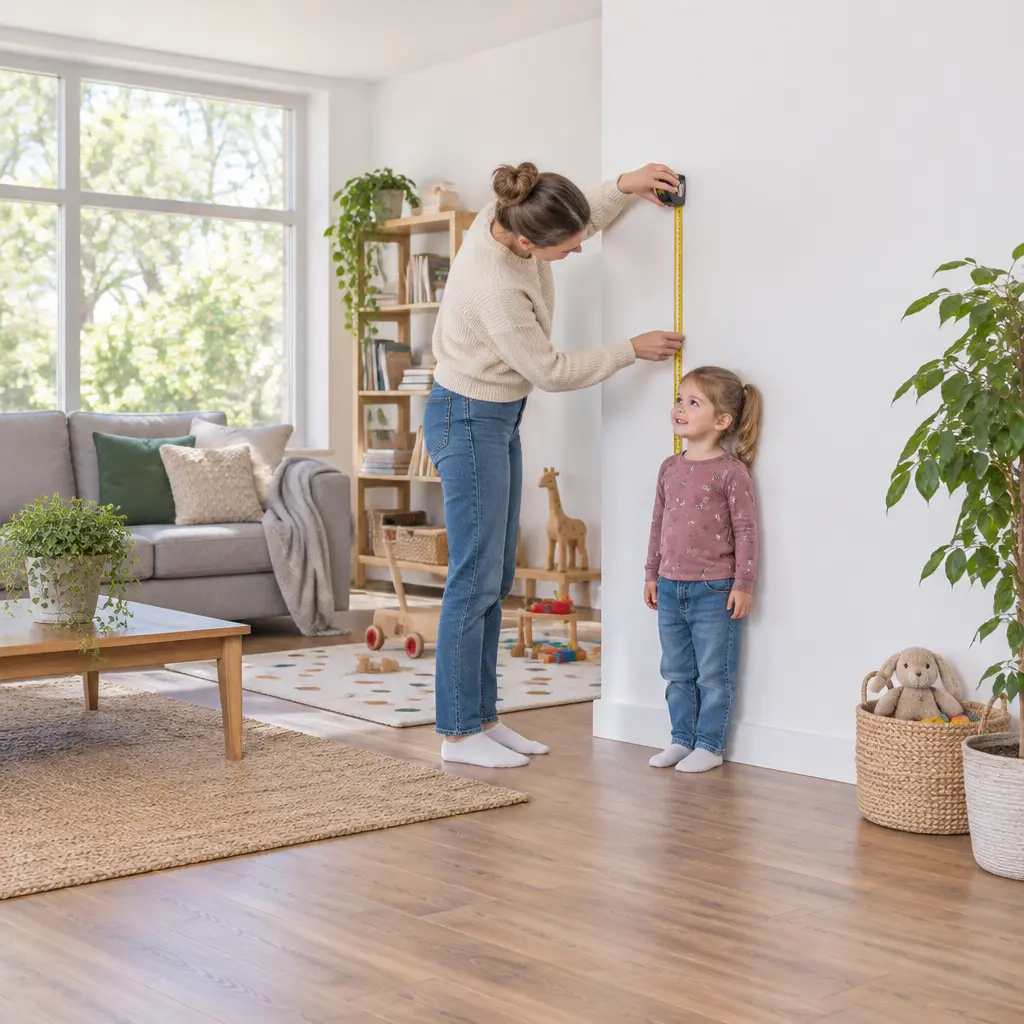
A toddler’s fit is the match between a child’s body measurements and a garment or shoe’s shape, size, and room for movement. To measure your toddler, use a flexible tape, measure over light clothing, and compare the results with the specific brand’s size chart rather than relying on age alone. Chest, waist, hips, height, and (for shoes) foot length are useful measurements; checking them regularly helps avoid clothes that restrict movement and shoes that rub or crowd growing feet.
Measuring Toddler Fit Starts with Accurate Body Measurements
A body measurement is a recorded dimension—such as height or circumference—taken at a specified point on the body. Clothing companies use these measurements to build size charts, but sizing is not universal: the U.S. Federal Trade Commission notes that apparel sizing lacks a single mandatory standard. That is why a toddler’s actual measurements and each product’s chart are more reliable than a label such as “2T.”
The Centers for Disease Control and Prevention (CDC) recommends that children under age 2 be assessed with recumbent length, measured lying down, while standing height is used from age 2 onward. These are growth measurements rather than clothing-size prescriptions, but they provide a consistent way to track a child’s length over time. For clothing, also measure the body areas that determine the garment’s fit.
Height and length
Height is the distance from the floor to the top of the head when a child stands straight without shoes. Have a toddler stand against a wall, look forward, and keep heels flat; mark the top of the head and measure from the floor to the mark. If the child is not yet 2 or cannot stand reliably, measure length while the child lies flat, ideally with another adult helping. Compare the result with the brand’s height range, not just the age range.
Chest, waist, and hips
Circumference measurements show how a garment is likely to fit around the body. Wrap a soft tape around the fullest part of the chest, keeping it level under the arms; measure the waist around the natural waist, without pulling the tape tight; and measure the hips around the fullest part of the seat with feet together. The tape should lie flat and comfortably touch the body. Record each result and use the garment’s chart to identify which measurement matters most for that item.
Inseam and sleeve length
Inseam measures the inside leg from the crotch to the ankle, while sleeve length is generally measured from the shoulder to the wrist. These measurements help assess trousers, leggings, pajamas, and long-sleeved tops. When a child will not stand still, measure a well-fitting garment laid flat and compare its dimensions with the new item’s product measurements, while allowing for differences in cut and fabric.
Choosing Toddler Clothing Fit from the Measurements
A clothing size is a manufacturer’s grouping of body or garment dimensions, not a guarantee of fit across brands. Once measurements are recorded, check the chart for the exact product and decide whether the garment needs room for movement, layering, or a diaper. Children grow at different rates, so age labels are best treated as a starting point rather than a measurement.
Compare the largest relevant measurement
For a one-piece outfit, compare height, chest, and torso fit; for trousers, prioritize waist, hips, and inseam. If measurements fall into different size bands, use the manufacturer’s guidance and consider the garment’s design. A stretchy top may accommodate a small difference more easily than structured pants. Avoid sizing up so much that hems drag, waistbands slip, or sleeves interfere with play.
Check ease and movement
Ease is the extra room between the body and a garment. A good toddler fit allows the child to sit, squat, reach, and walk without pinching or pulling. Check that waistbands do not leave deep marks, armholes do not restrict reaching, and fasteners remain secure. For sleepwear, follow the garment’s safety label: the U.S. Consumer Product Safety Commission explains that children’s snug-fitting sleepwear is designed to reduce fire risk, while loose-fitting sleepwear may need to meet stricter flammability requirements.
Use a fit check, not just a size label
After dressing the child, inspect the garment while the toddler moves. Look for tight seams, gaping closures, slipping shoulders, exposed midriff when reaching, and hems that catch underfoot. For example, if a toddler’s waist and chest fit one chart size but trousers are too long, choose a better-fitting cut or adjustable waist rather than automatically buying a much larger outfit.
Measuring Toddler Feet for Shoe Fit
Shoe fit depends on foot length, width, shape, and the shoe’s internal dimensions. A child’s printed shoe size can vary by brand and style, so measure both feet and fit shoes to the larger one. The American Academy of Pediatrics advises checking fit regularly because children’s feet grow quickly; it notes that children under 16 months may grow more than half a shoe size every two months, and children from 16 to 24 months about half a size every three months. These are general growth estimates, not a substitute for checking the individual child’s fit.
Measure both feet while standing
Place a sheet of paper on a hard floor and have the toddler stand on it wearing the socks intended for the shoes. Trace each foot or mark the back of the heel and the tip of the longest toe; measure the distance between the marks. Standing matters because the foot spreads under body weight. Measure later in the day if practical, since feet can expand slightly during daily activity, and use the longer measurement when the feet differ.
Check width, toe room, and heel hold
Length alone does not establish a good fit. The shoe should not squeeze the sides of the foot, and the toes should have room to spread and move. With the child standing, feel the shoe’s front to locate the longest toe and check the manufacturer’s recommended allowance; avoid relying on a universal “thumb’s width” rule because shoe shapes and fit guidance differ. The heel should stay reasonably secure without rubbing, and the child should walk naturally rather than trip or scuff.
Recheck fit as feet grow
A shoe that fit recently may become tight before the outside looks worn. Check fit every few months and sooner if the child complains, removes shoes repeatedly, develops redness or blisters, or begins walking differently. A practical example is a toddler whose toes press against the front of a familiar shoe: measure both feet again and compare them with the current shoe’s fit, rather than purchasing the same labeled size automatically.
A Simple Toddler Measuring Routine
A repeatable routine makes measurements more useful and reduces guesswork. Keep a dated note on a phone or paper, including the measurement, unit, brand, and item type. Re-measure when a garment becomes tight, when a new season begins, or before ordering shoes online.
- Choose a calm moment and use a flexible tape measure; remove bulky outerwear and shoes for body measurements.
- Measure height or length, then the chest, waist, and hips needed for the item.
- For shoes, measure both feet while standing in the usual socks and record the longer foot.
- Compare measurements with the exact brand or product chart, checking its units and any fit notes.
- Try the item on and observe movement, comfort, and pressure points; return or exchange it if fit is restrictive or unstable.
A chart can be shown as a simple measurement log: Date | Height/length | Chest | Waist | Hips | Left foot | Right foot | Brand and size. Updating this table over time makes changes easier to spot, but it should not be used to diagnose growth concerns; a pediatric clinician can interpret growth measurements using appropriate growth charts.
Conclusion: Measure, Compare, and Recheck Toddler Fit
Accurate toddler fit begins with consistent body and foot measurements, followed by comparison with the specific brand’s chart and an in-person movement check. Height, chest, waist, hips, inseam, and foot length each matter for different garments, while ease, toe room, and secure heel fit determine comfort in use. Because sizing varies and children grow quickly, keep a dated measurement record and recheck clothing and shoes regularly. For further guidance, consult a pediatric clinician about growth tracking and use the manufacturer’s current sizing and care information when choosing products.
Sources: Centers for Disease Control and Prevention, Measuring Children’s Height and Weight, https://www.cdc.gov/growth-chart-training/hcp/using-growth-charts/measuring-weight.html; Federal Trade Commission, Clothing Sizes, https://www.ftc.gov/business-guidance/resources/clothing-sizes; American Academy of Pediatrics, Shoes for Children: A Guide for Parents, https://www.healthychildren.org/English/ages-stages/toddler/Pages/Shoes-for-Children.aspx; U.S. Consumer Product Safety Commission, Children’s Sleepwear, https://www.cpsc.gov/Business–Manufacturing/Business-Education/Business-Guidance/Childrens-Sleepwear.