Toddler clothing sizes are age-based labels, not exact measurements, so it is common for a child to fit one size in one brand and another size elsewhere. When your toddler is between sizes, choose the garment that fits the child’s current measurements and intended use: size up for room to grow or extra layers, but prioritize a secure, comfortable fit for sleepwear, shoes, and anything that could become a safety hazard. The CDC’s growth charts track children’s growth over time; they are not clothing-size charts. This guide explains how to measure, compare size charts, decide when to size up or down, and handle shoes, seasonal clothing, and returns.
Choosing toddler clothing when your child is between sizes
“Between sizes” means a child’s measurements or fit fall near the boundary between two sizes, or different body measurements point to different sizes. Children grow at different rates, and clothing labels vary by manufacturer, so age alone is a rough guide rather than a reliable fit test. The American Academy of Pediatrics advises monitoring growth with appropriate growth charts during health visits; those charts assess growth patterns, not the size a child should wear.
A practical starting point is to compare your toddler’s height and weight with the specific brand’s size chart, then try the garment on when possible. Pick the larger size when extra room will not interfere with movement or safety; choose the closer fit when the garment must stay secure or when excess fabric could create a risk. In the United States, children’s sleepwear is subject to federal flammability requirements, and snug-fitting sleepwear is one way garments may comply. Always check the garment label and follow its care and safety instructions.
How measurements determine toddler clothing fit
A clothing size chart is a manufacturer’s guide linking body measurements to a labeled size. It is not a universal standard: brands may use different measurement ranges, cuts, and allowances for ease. The Federal Trade Commission’s textile labeling rules require certain fiber and country-of-origin disclosures, but they do not establish a single national toddler clothing-size chart. This is why a size 3T in one brand may fit differently from a 3T in another.
Measure height and weight accurately
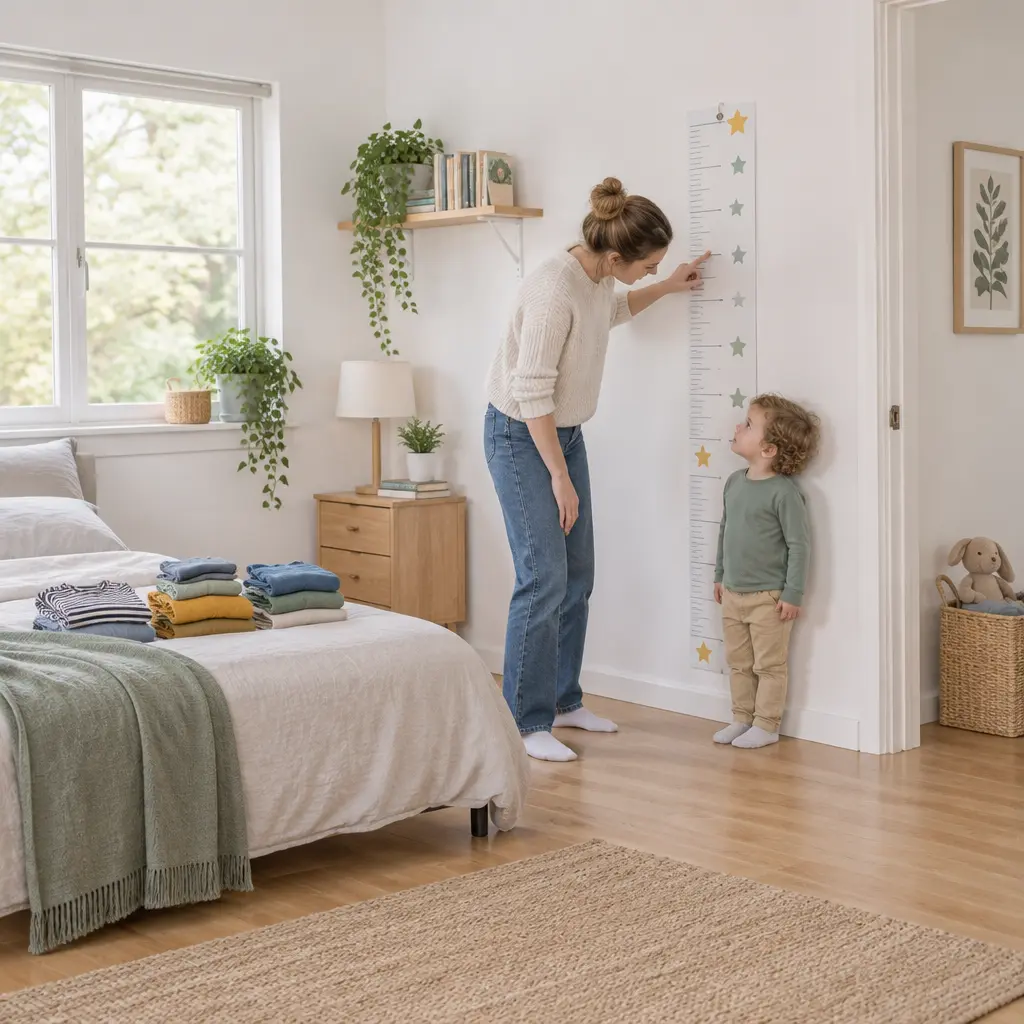
Height and weight are commonly used on toddler size charts. Measure height without shoes, with your child standing straight against a wall if they can cooperate; record weight using a reliable scale. Check the chart’s instructions because some brands also use chest, waist, hip, or inseam measurements. Recheck measurements as needed, especially before buying a new season’s wardrobe, rather than assuming the size still fits.
The CDC recommends using its growth charts for children from age 2 onward to assess growth in the context of age and sex. A percentile is a comparison with a reference population, not a clothing recommendation. If growth changes sharply or you have concerns, ask your child’s healthcare professional rather than trying to interpret clothing fit as a medical measure.
Read the brand’s chart, not just the age label
Age labels such as 2T or 3T are broad shopping cues. Compare your child’s measurements with the chart for the exact item, since sizing can differ between brands and even between garment types. If one measurement falls into a larger size while another falls into a smaller one, prioritize the measurement that matters most for that garment: height for one-piece pajamas, waist for trousers, or chest for a fitted top.
When to size up or choose the smaller size
Sizing up means selecting the next labeled size to provide additional length or room. It can be useful when a child is at the upper end of a size range, when a garment will be worn over layers, or when a style is designed to be roomy. But more room is not always better: clothing that slips, drags, bunches, or restricts movement may be uncomfortable or unsafe. Fit should be judged on the actual garment, not the label alone.
Size up for growth and layering—when the fit remains safe
Consider the larger size for everyday tops, flexible-waist trousers, jackets, and other garments that remain comfortable and secure with extra room. Check sleeve and trouser lengths, waistbands, and closures. A larger garment should not cover the hands or feet, trip the child, or fall off the shoulders. For outerwear, test movement and make sure the child can walk, climb, and play comfortably.
Choose a closer fit for sleepwear and fitted garments
Sleepwear deserves particular care. The U.S. Consumer Product Safety Commission explains that children’s sleepwear generally must meet flammability standards; garments may qualify through flame-resistant fabric or, for certain sizes and styles, a snug-fitting design. Do not assume oversized pajamas are suitable for sleep. Read the label, follow the manufacturer’s instructions, and avoid adding loose layers that conflict with the garment’s intended fit.
For everyday fitted items, the smaller size may work if it does not pull across the body, pinch, leave deep marks, or limit movement. Avoid keeping clothing that has become tight at the shoulders, crotch, waist, or chest, even if its length still seems adequate.
Special cases: shoes, seasonal clothes, and mixed-size outfits
Not every “between sizes” decision is solved by buying a larger garment. Shoes, weather-dependent layers, and outfits made from separates each call for a different fit check. Treat each item according to how it functions and how securely it stays in place.
Toddler shoes need fit checks, not room to grow alone
Children’s feet grow, but a shoe that is too large can slip and make walking harder. Have both feet measured while the child is standing, since feet may differ in length, and check that the heel stays in place and toes can move. The American Academy of Pediatrics recommends well-fitting shoes that allow natural movement; ask a children’s shoe fitter or healthcare professional if you are unsure. Recheck fit regularly rather than relying on the printed shoe size, which can vary by maker.
Plan seasonal purchases around the actual wear date
For coats, rainwear, and winter layers, consider what the child will wear underneath and when the item will be used. A coat that fits over a light shirt may feel tight over a sweater, while a coat that is much too large can interfere with movement. If buying ahead, review the retailer’s exchange policy and keep tags attached until you confirm the fit.
Mix sizes across separates when proportions differ
It is normal for a toddler to wear different sizes in tops, bottoms, and one-piece outfits. A longer torso may call for a larger bodysuit while trousers fit the smaller size; a broad waist may change the best trouser choice even if the child’s height matches another size. Buying separates can provide a better fit than forcing every item into one labeled size.
A simple fit checklist for clothes between sizes
Use this quick check after comparing the child’s measurements with the brand chart:
- Check that the child can sit, bend, reach, and walk without fabric pulling or restricting movement.
- Make sure waistbands and closures stay in place without pinching or leaving uncomfortable marks.
- Confirm sleeves and hems do not cover hands, trail on the floor, or create a tripping hazard.
- For sleepwear, follow the garment’s safety label and avoid assuming that a larger size is appropriate.
- For shoes, check secure heel fit and toe room on both feet; do not buy based on age or size number alone.
- Keep receipts and tags until the child has tried the item and you are satisfied with the fit.
Conclusion: choose fit, comfort, and safety over the label
When a toddler is between sizes, use current measurements and the individual brand’s chart as a starting point, then assess how the garment works on the child. Sizing up can help with growth and layering when the item remains secure; a closer fit is often preferable for sleepwear, shoes, and garments that could impede movement. Growth charts help healthcare professionals follow a child’s development, but they do not determine clothing size. Measure again as needed, inspect fit in motion, and consult your child’s healthcare professional with concerns about growth or development.
Sources: Centers for Disease Control and Prevention, WHO Growth Charts and CDC Growth Charts, https://www.cdc.gov/growthcharts/; U.S. Consumer Product Safety Commission, Children’s Sleepwear Regulations, https://www.cpsc.gov/Business–Manufacturing/Business-Education/Business-Guidance/Childrens-Sleepwear-Regulations; Federal Trade Commission, Clothing and Textiles, https://www.ftc.gov/business-guidance/industry/clothing-textiles; American Academy of Pediatrics, Choosing Shoes for Children, https://www.healthychildren.org/English/ages-stages/gradeschool/Pages/Choosing-Shoes-for-Children.aspx.