Toddler graphic tees are printed shirts sized for young children, combining playful designs with fabrics and construction suited to frequent wear. To handle juice spills and playground chaos, look for washable, colorfast cotton or cotton-blend fabric, durable seams, and prints that tolerate the care label’s washing instructions. The U.S. Consumer Product Safety Commission’s clothing guidance emphasizes keeping children’s garments safe and properly fitted, while the American Academy of Pediatrics recommends practical sun protection outdoors—making fabric, fit, and care relevant alongside a fun graphic. The sections below explain what makes a tee durable, how to judge materials and prints, and how to wash and choose shirts for everyday toddler life.
Durability defines toddler graphic tees for messy play
A durable toddler graphic tee is a washable, well-constructed shirt that keeps its fit, seams, color, and artwork through repeated wear and laundering. There is no universal government durability rating for children’s T-shirts, so shoppers must assess practical indicators: fiber and fabric, stitching, print method, care directions, and evidence from repeated-wash product testing. Those details matter because a shirt can survive a spill yet still fail through a stretched neckline, twisting side seams, or a cracked graphic.
Fabric and construction
Fabric weight, knit structure, and seam quality influence comfort and useful life. Cotton jersey is soft and breathable; cotton-polyester blends may dry faster and resist some wrinkling, though the exact performance depends on the blend and garment construction. Check that the fabric feels substantial without being too warm, and inspect shoulder seams, hems, and the neckline for even stitching and secure finishing. The Federal Trade Commission’s textile-labeling rules require most covered textile products to identify fiber content, helping families compare materials rather than relying only on marketing terms.
Print methods and color retention
Graphic durability depends on both the decoration and how the tee is cared for. Screen prints, direct-to-garment prints, heat transfers, and embroidery behave differently; none guarantees that a design will remain pristine under every wash routine. A thick, stiff print may feel less comfortable, while a delicate transfer may be more vulnerable to peeling if exposed to high heat. Follow the garment’s care label, turn printed shirts inside out, and avoid ironing directly over the design. These steps reduce rubbing and heat exposure, although they cannot compensate for poor print quality.
Fit, comfort, and child safety
A playground-ready tee should allow movement without hanging so loosely that it interferes with play. Check the size chart and garment measurements rather than assuming every brand’s toddler sizing is identical. The U.S. Consumer Product Safety Commission warns that drawstrings in children’s upper outerwear can catch on playground equipment; tees generally do not use these features, but the broader lesson is to inspect clothing for cords, loose trims, and detachable decorations that could create hazards. For outdoor wear, the American Academy of Pediatrics advises combining protective clothing with shade and other sun-safety measures; a regular T-shirt should not automatically be treated as certified UV-protective clothing.
Stain resistance and washability protect graphic tees
Washability is a garment’s ability to be cleaned according to its care instructions without unacceptable changes in size, color, seams, or decoration. “Stain-resistant” is not the same as stain-proof: juice pigments and sugars can leave marks, and results vary with the drink, fabric, temperature, and time before washing. For everyday use, a tee that can be laundered at home is often more practical than one requiring special treatment, but always use the label as the primary guide.
Responding to juice spills
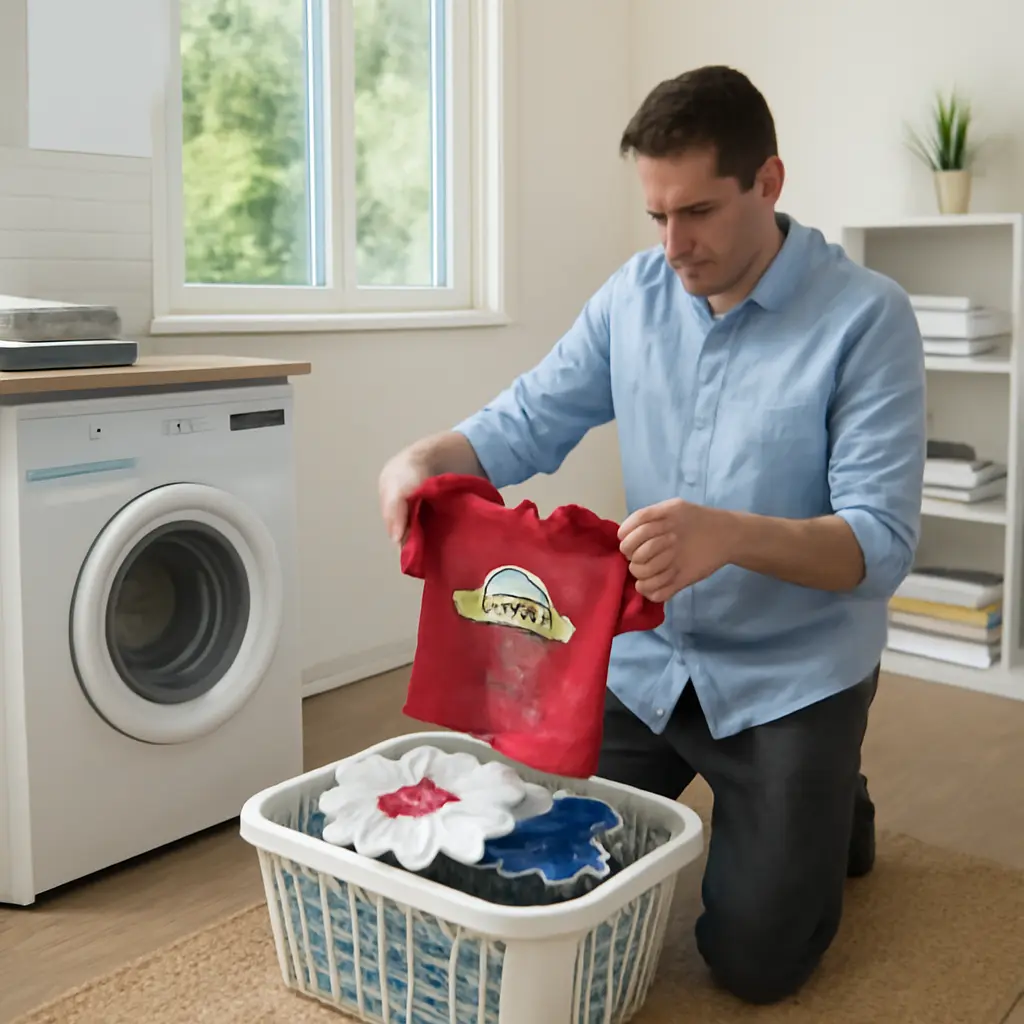
For a fresh spill, blot rather than rub, then rinse the affected area with cool water when practical. The American Cleaning Institute recommends treating stains promptly and checking that a stain has been removed before drying; heat can make some stains harder to remove. Use a laundry product according to its label and test stain treatments on an inconspicuous area if the garment’s color or print may be sensitive. Avoid mixing cleaning products, and keep detergents and stain removers out of children’s reach.
Laundry choices that help preserve the print
A low-friction routine can help extend a graphic tee’s wearable life: sort by color, close fasteners on other garments, wash printed shirts inside out, and choose a cycle and water temperature permitted by the care label. Air-drying can reduce exposure to dryer heat, but the label should determine whether that is suitable. Do not assume that “cold wash” or a particular detergent is necessary for every shirt; the fabric, dye, and printing process differ among products.
Reading care and fiber labels
Labels translate a garment’s materials and recommended care into actionable information. The Federal Trade Commission’s Care Labeling Rule generally requires care instructions for covered apparel, while textile rules address fiber content and other disclosures. Before buying, check whether the tee can be washed and dried in a way that fits the household routine. A shirt that looks appealing but requires inconvenient care may see less use—and may be more likely to be mishandled.
Choosing toddler graphic tees for playground use
Choosing a playground tee means balancing comfort, construction, easy care, and a design the child enjoys. Durability claims are most useful when backed by specific information, such as fiber content, clear care instructions, and a stated garment-testing method. When brands do not publish wash-test results, buyers can still compare observable features and keep receipts or note how a shirt performs after several washes.
A practical buying checklist
- Check the fiber-content and care labels before purchase.
- Inspect hems, shoulder seams, neckline recovery, and the attachment of any embellishments.
- Choose a comfortable fit that allows running, climbing, and reaching without excess fabric.
- Look for a graphic that feels flexible and is not already lifting or cracking at the edges.
- For strong sun, use shade and other protective measures; choose clothing specifically labeled for UV protection if that feature is needed.
- Buy a small number of styles first if you are unsure how a brand’s sizing or print will hold up.
A simple home wear-and-wash check
A useful real-world comparison is to photograph a new tee, follow its care label for several normal wash cycles, and then inspect the same areas: graphic edges, neckline, seams, color, and overall length. This is an informal household check, not a standardized laboratory test, but it can help identify which brands suit a family’s routine. A chart could track each shirt’s wash count against visible changes; record observations consistently rather than treating one garment as proof that every item from a brand performs the same way.
Conclusion: durable toddler graphic tees make everyday wear easier
The best toddler graphic tees pair comfortable fabric and secure construction with a print and care routine that can handle ordinary spills and active play. Check fiber and care labels, prioritize a safe and mobile fit, treat juice stains promptly, and reduce unnecessary heat and friction when laundering. Because there is no universal durability score, compare concrete product details and observe how garments perform over time. For more guidance, consult the Federal Trade Commission’s textile and care-label rules, the American Cleaning Institute’s stain-care advice, and pediatric sun-safety recommendations when choosing outdoor clothing.
Sources: U.S. Federal Trade Commission, Threading Your Way Through the Labeling Requirements Under the Textile and Wool Acts, https://www.ftc.gov/business-guidance/resources/threading-your-way-through-labeling-requirements-under-textile-wool-acts; U.S. Federal Trade Commission, Care Labeling Rule, https://www.ftc.gov/legal-library/browse/rules/care-labeling-rule; U.S. Consumer Product Safety Commission, Drawstrings in Children’s Upper Outerwear, https://www.cpsc.gov/Business–Manufacturing/Business-Education/Business-Guidance/Drawstrings-in-Childrens-Upper-Outerwear; American Academy of Pediatrics, Sun Safety: Information for Parents About Sunburn & Sunscreen, https://www.healthychildren.org/English/safety-prevention/at-play/Pages/Sun-Safety.aspx; American Cleaning Institute, Stain Removal, https://www.cleaninginstitute.org/cleaning-tips/clothes/stain-removal