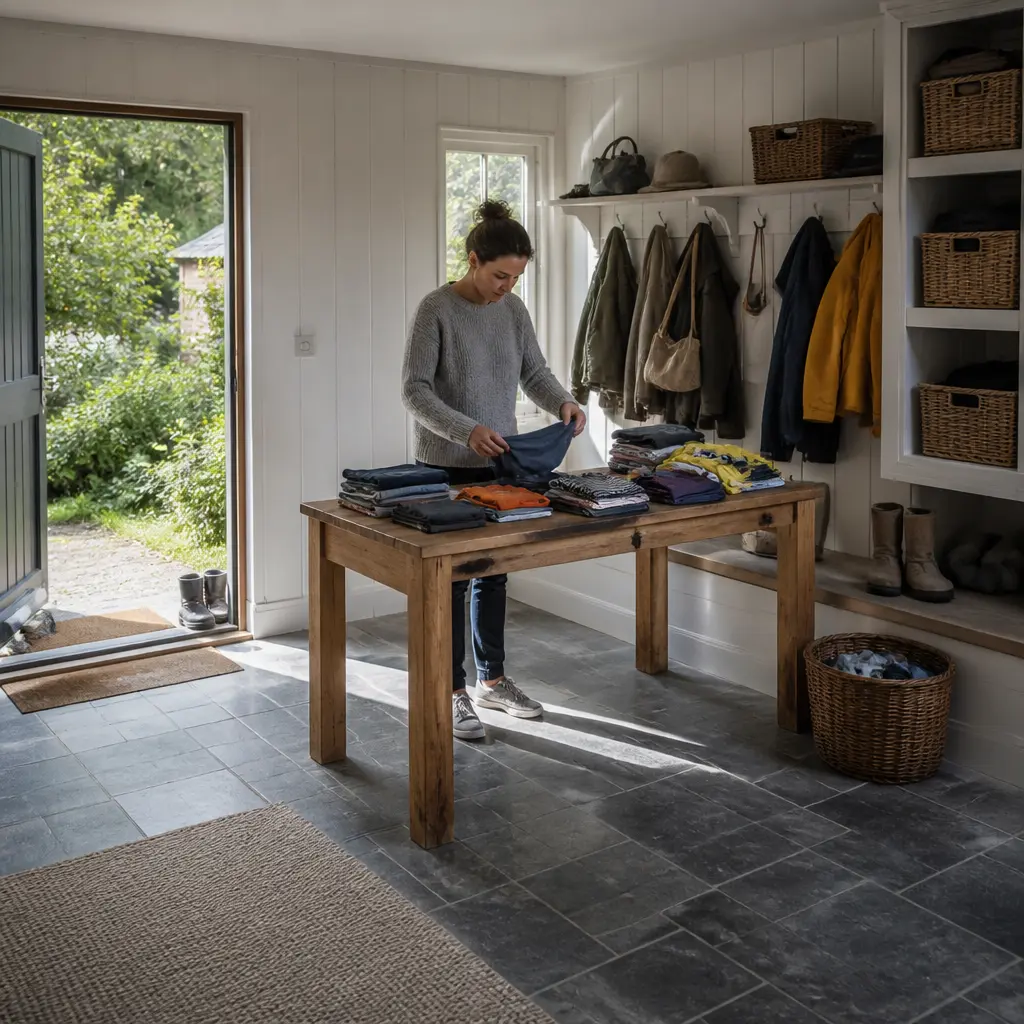
Baby fabrics—skin gentleness describes how comfortably a textile contacts an infant’s developing skin while minimizing friction, heat, moisture retention, allergens, dyes, and irritating finishes. Soft, breathable cotton, carefully selected cotton blends, and responsibly certified fabrics are generally practical choices because babies have a thinner, more vulnerable skin barrier and may spend many hours in direct contact with clothing and bedding. The American Academy of Dermatology reports that atopic dermatitis affects up to 20% of children, making fabric selection, washing practices, and moisture control relevant for many families.
Protecting Baby Fabrics—Skin Gentleness
Baby fabrics—skin gentleness is an attribute pairing that evaluates a textile’s tactile softness, surface friction, breathability, moisture behavior, chemical safety, and suitability for delicate skin. It is not simply a synonym for “luxury” or “high thread count.” A fabric can feel soft in a store yet become rough after repeated washing, trap heat, or contain finishes that irritate sensitive skin.
The American Academy of Pediatrics and dermatology guidance commonly emphasize breathable clothing, fragrance-free laundering, and avoiding known irritants for babies prone to rashes. Research summarized by the National Institutes of Health indicates that newborn skin has a less mature barrier than adult skin, with greater vulnerability to water loss, friction, and environmental irritants. The most useful evaluation therefore combines touch with fiber structure, garment construction, care instructions, and the child’s individual response.
Cotton softness and breathability
Cotton is a plant-based cellulosic fiber commonly used for bodysuits, sleepers, sheets, and burp cloths. Its popularity comes from a relatively soft hand, absorbency, breathability, and broad availability. Jersey cotton, interlock cotton, and combed cotton can feel especially smooth because their knitted or processed surfaces reduce some of the roughness associated with coarse yarns.
Cotton is not automatically irritation-free. Rough seams, stiff prints, strong dyes, fabric softener residue, or a tight fit may cause more discomfort than the fiber itself. Pre-washed cotton can be a practical choice because laundering removes some manufacturing residues and reveals whether the fabric shrinks or becomes scratchy before it is used regularly.
Bamboo-derived rayon and modal softness
Bamboo-derived rayon and modal are regenerated cellulose fibers rather than untreated bamboo fibers. They are often smooth, lightweight, and drapable, which can make them comfortable against the skin. However, “bamboo” on a label does not necessarily mean that the finished textile retains the natural properties of bamboo, and the processing method can vary substantially between products.
The Federal Trade Commission has warned that rayon made from bamboo must be labeled accurately and should not be marketed as natural bamboo fiber or assumed to have unproven antibacterial benefits. For a baby, the more relevant questions are whether the fabric feels smooth after washing, permits adequate airflow, has reliable fiber labeling, and carries credible chemical-safety certification.
Wool, fleece, and temperature-sensitive layers
Wool is a warm animal fiber, while fleece is usually a synthetic knitted fabric designed to retain heat. Both can be useful in cool conditions, but wool fibers may feel prickly and fleece can hold heat or contribute to static. Babies with eczema or heat-sensitive skin may tolerate a smooth cotton layer underneath better than direct contact with textured wool or heavily brushed fleece.
The National Health Service commonly advises families managing eczema to choose loose cotton clothing and avoid fabrics that feel irritating, including wool for some children. This is an example of a hyponym within baby fabrics—skin gentleness: warmth management is part of gentleness because overheating and perspiration can aggravate discomfort even when a fabric feels soft.
Reducing Friction Through Baby Fabric Construction
Fabric construction refers to how fibers become yarns, knitted panels, woven cloth, seams, labels, and decorative details. For delicate skin, construction can matter as much as fiber content. Smooth knitted fabrics generally stretch with the body and can reduce pressure, while rough embroidery, raised appliqués, exposed elastic, and bulky seams may create localized friction.
Smooth knits and low-friction surfaces
Interlock and fine-gauge jersey knits are commonly selected for baby clothing because they are flexible and relatively smooth. Flat seams, tagless labels, covered elastic, and printed rather than raised decorations can further reduce rubbing. Parents should run a clean hand over the inside of a garment, especially around the neck, wrists, waist, ankles, and diaper area, before dressing a baby.
Fit also changes friction. Clothing that is too tight presses seams against the skin, while very loose garments can bunch and rub during movement. A comfortable garment should allow normal motion, leave room for diapers, and avoid bands that leave persistent red marks.
Moisture control and breathability
Breathability is a fabric’s ability to allow air and water vapor to pass through, while moisture management describes how it absorbs, spreads, or releases perspiration. Absorbent cotton can help manage small amounts of moisture, but a saturated fabric may remain damp. Lightweight layers and prompt changes are therefore important, particularly around the neck, folds, and diaper region.
The National Eczema Association identifies heat, sweat, and irritating textiles as common concerns for people with eczema. A breathable base layer, moderate room temperature, and avoidance of overdressing can support comfort. No fabric can prevent eczema on its own, and a persistent rash should be assessed by a qualified clinician.
Choosing Safer Baby Fabrics—Skin Gentleness
Material selection should combine tactile testing with transparent labeling and sensible care. Organic certification addresses how some fibers are grown, but it does not automatically prove that a finished garment is softer or safer for every baby. Similarly, a “natural” fiber can still contain dyes, finishes, residues, or rough construction that causes irritation.
Useful labels and certifications
OEKO-TEX Standard 100 tests textile components for selected harmful substances, with stricter product classes intended for babies and young children. The Global Organic Textile Standard addresses organic-fiber requirements along with environmental and social criteria throughout textile processing. These certifications can improve purchasing transparency, although they do not replace checking fit, softness, washing instructions, and the baby’s actual reaction.
Caregivers should be cautious with vague claims such as “chemical-free,” “hypoallergenic,” or “antibacterial.” Such language may lack a consistent legal or scientific meaning. A better approach is to look for a complete fiber label, credible certification, minimal decoration, and a return policy when testing unfamiliar products.
Gentle laundering practices
Laundering is part of fabric gentleness because detergent residue, fragrance, dyes, and mechanical wear can change how a textile feels. The American Academy of Dermatology recommends fragrance-free and dye-free products for people with sensitive skin, and an extra rinse may help remove remaining detergent from some fabrics.
- Wash new clothing and bedding before first use.
- Choose fragrance-free, dye-free detergent when a baby has sensitive skin or eczema.
- Avoid fabric softeners and dryer sheets if they leave fragrance or coating on the fabric.
- Follow the care label to limit shrinkage, pilling, and roughness.
- Replace clothing that develops abrasive pilling, stretched elastic, or hardened seams.
Applying Baby Fabrics—Skin Gentleness in Daily Care
A practical wardrobe often begins with soft cotton bodysuits, smooth sleepers, breathable sheets, and lightweight layers that can be removed when the baby becomes warm. For colder conditions, a smooth base layer can separate skin from wool or fleece. Parents can compare fabrics by touch after washing rather than relying only on product descriptions or marketing terms.
A useful home test is to observe the skin after several hours of normal wear. Redness that follows a seam or elastic band suggests friction or pressure; damp skin and heat suggest insufficient ventilation or excessive layering; widespread irritation after a new garment may indicate detergent, dye, finish, or an unrelated skin condition. The garment should be removed if discomfort is apparent, and medical advice is appropriate for persistent, painful, weeping, or rapidly spreading rashes.
A simple comparison chart could score each garment from one to five for surface smoothness, breathability, seam comfort, wash durability, and label transparency. This kind of household tracking can reveal that the best choice is not always the softest item straight from the package, but the one that remains comfortable, washable, and well tolerated over time.
Conclusion: Making Baby Fabrics—Skin Gentleness the Priority
Baby fabrics—skin gentleness depends on more than fiber names. Cotton and selected regenerated cellulose fabrics may provide smooth, breathable options; wool and fleece require attention to texture and heat; and construction details such as seams, labels, elastic, and prints can determine whether a garment feels comfortable. Certifications such as OEKO-TEX Standard 100 and the Global Organic Textile Standard add useful information, while fragrance-free laundering helps preserve a gentle surface.
Families can make informed choices by selecting breathable, well-fitting garments; washing them before use; avoiding unnecessary fragrance and rough decoration; and watching how the baby’s skin responds. Because atopic dermatitis affects up to one in five children according to the American Academy of Dermatology, fabric decisions are a meaningful part of everyday comfort, though they cannot replace professional care for ongoing skin problems. Further reading from pediatric, dermatology, and textile-certification organizations can help caregivers evaluate products with greater confidence.
Sources: American Academy of Dermatology, Atopic dermatitis: Diagnosis and treatment, https://www.aad.org/public/diseases/eczema/atopic-dermatitis; American Academy of Dermatology, How to prevent eczema flare-ups, https://www.aad.org/public/diseases/eczema/atopic-dermatitis/itch-relief; National Institutes of Health, Newborn Skin: Part I. The Structure and Function of the Skin, https://www.ncbi.nlm.nih.gov/pmc/articles/PMC3886293/; Federal Trade Commission, Bamboo Textiles, https://www.ftc.gov/business-guidance/resources/bamboo-textiles; National Health Service, Atopic eczema, https://www.nhs.uk/conditions/atopic-eczema/; National Eczema Association, Eczema and Clothing, https://nationaleczema.org/eczema/types-of-eczema/atopic-dermatitis/; OEKO-TEX, Standard 100, https://www.oeko-tex.com/en/our-standards/standard-100-by-oeko-tex/; Global Organic Textile Standard, About GOTS, https://global-standard.org/the-standard/general-description