High-end children’s clothing is premium apparel designed with superior materials, construction, styling, or brand reputation, while everyday practicality means that garments remain comfortable, washable, durable, safe, and adaptable to active family life. The most effective balance is not choosing between luxury and usefulness: it is selecting premium basics, versatile occasionwear, heirloom-quality pieces, and resale-friendly designs according to how often and where a child will wear them. This approach matters because children quickly outgrow clothing, household apparel budgets are limited, and the U.S. Environmental Protection Agency reported that 17 million tons of textiles were generated in 2018, with about 9 million tons landfilled. Thoughtful purchasing can therefore improve cost per wear, reduce waste, and preserve the pleasure of dressing children well.
Balancing High-End Children’s Clothing With Everyday Practicality
The entity-attribute pairing in this topic is children’s clothing–practicality: the degree to which a garment’s design, fabric, care requirements, fit, safety, and durability support real-world childhood use. The American Society for Testing and Materials describes textile durability through performance properties such as resistance to abrasion, colorfastness, dimensional stability, and seam strength. These technical qualities help explain why a high price alone does not prove that a garment is practical.
Practicality has several related forms, or hyponyms. Washability concerns whether clothing can withstand repeated cleaning; wearability concerns comfort, movement, and climate suitability; adaptability concerns adjustable features and season-spanning use; durability concerns resistance to tearing, pilling, fading, and seam failure; and economic practicality concerns cost per wear rather than purchase price alone. These characteristics are especially important for children because food spills, outdoor play, rapid growth, and frequent laundering place greater demands on garments than occasional adult clothing.
Premium Basics: The Foundation of Practical Luxury
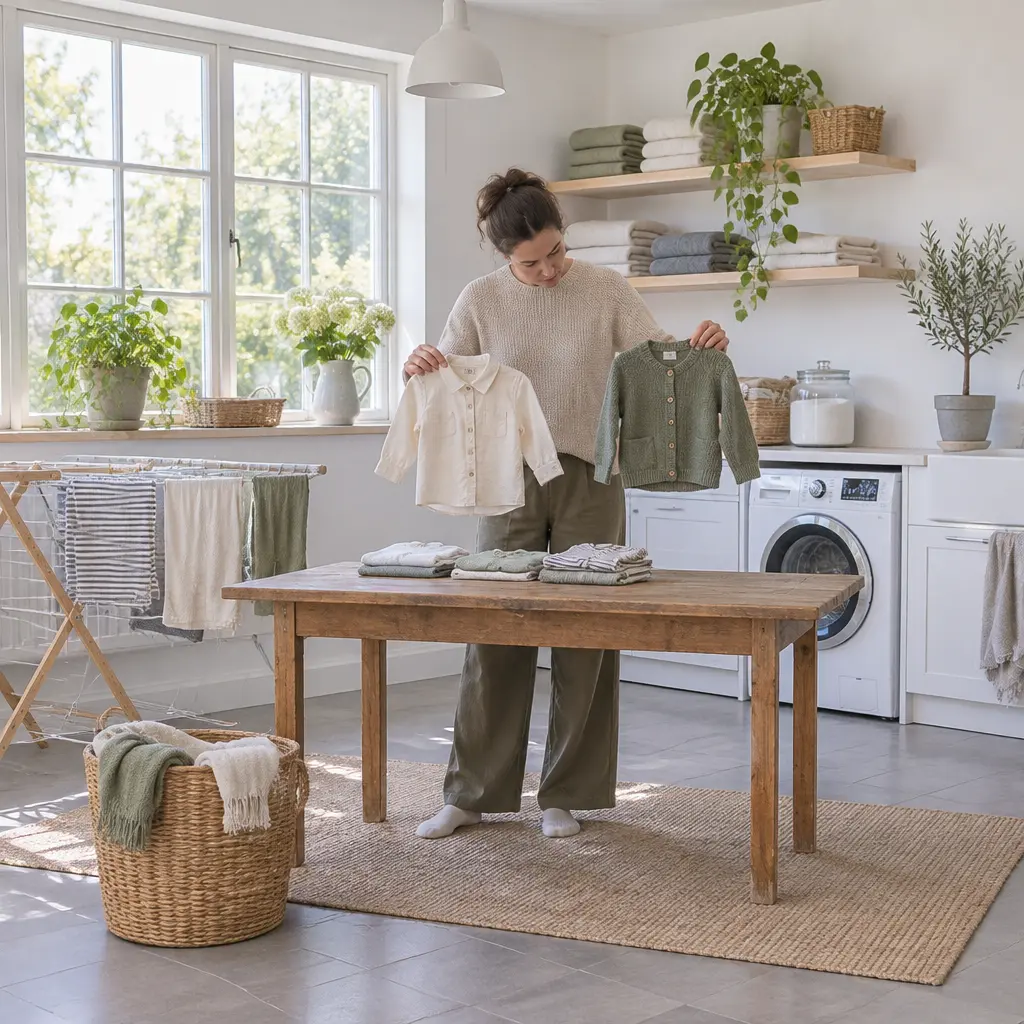
Premium basics are everyday garments such as cotton T-shirts, knit trousers, leggings, cardigans, sweatshirts, pajamas, and soft outer layers that combine elevated materials with uncomplicated construction. Their value comes from repeated use, not visual extravagance. A well-made cardigan worn 40 times may provide more value than a highly embellished outfit worn once.
Parents can evaluate premium basics through fiber quality, seam finishing, reinforced stress points, stable waistbands, and the absence of scratchy labels or restrictive trims. Natural fibers such as cotton, linen, and wool can offer breathability and comfort, while carefully selected synthetic fibers may improve stretch, drying speed, or abrasion resistance. The best choice depends on the child’s activity, skin sensitivity, local climate, and laundering routine rather than on fiber prestige alone.
Occasionwear: High Style With Repeat-Wear Potential
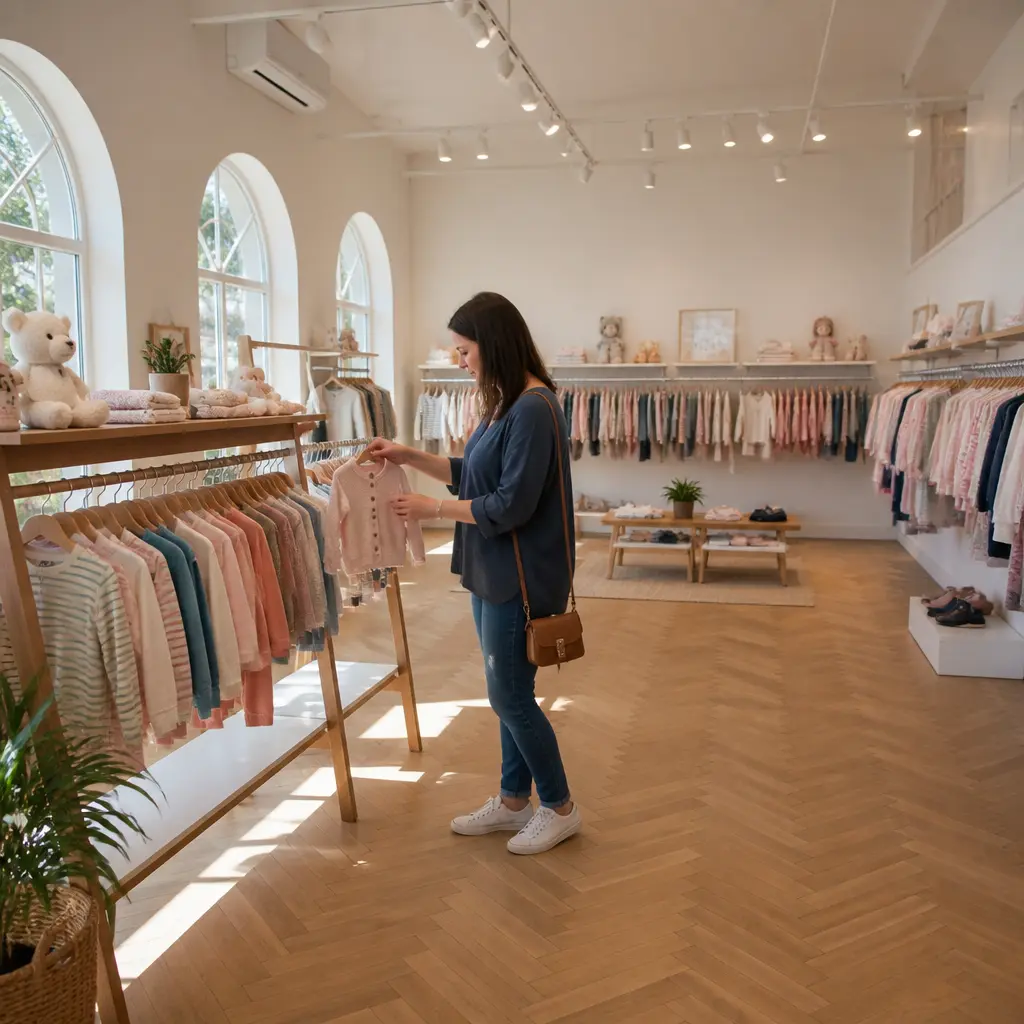
Occasionwear includes formal dresses, tailored shirts, blazers, dress trousers, ceremony outfits, and special knitwear intended for celebrations or photographs. These garments can justify a higher price when they have timeless silhouettes, adjustable details, forgiving fits, and enough durability to serve multiple events or children.
Practical occasionwear avoids excessive beading, fragile feathers, stiff fabrics, and complicated closures when those features limit movement or make cleaning difficult. A formal dress with a washable lining, adjustable straps, and a classic color may be worn at a birthday party, holiday gathering, family portrait session, and future sibling’s event. The relevant metric is cost per occasion: a $180 garment worn 12 times costs $15 per wear, while a $60 garment worn once costs $60 per wear.
How Durability Strengthens High-End Children’s Clothing Practicality
Durability is the attribute most likely to convert a luxury purchase into a practical investment. It refers to a garment’s ability to maintain function and appearance through physical stress, laundering, storage, and repeated use. High-end children’s clothing should be assessed by observable construction rather than branding alone.
Fabric Performance and Care Requirements
Fabric performance includes resistance to abrasion, shrinkage, color loss, stretching, staining, and pilling. Parents should read the care label before buying because dry-clean-only garments may have a substantially higher ownership cost than machine-washable alternatives. The Federal Trade Commission requires most textile products sold in the United States to disclose fiber content, country of origin, and the identity of the manufacturer or marketer, giving shoppers useful information for comparing quality and care expectations.
A practical evaluation chart can compare four attributes before purchase: fiber and weave, laundering method, expected frequency of wear, and repairability. For example, a tightly woven cotton overshirt may be more useful for school and travel than a delicate cashmere layer, even if cashmere has a higher luxury association. Wool can be highly durable and insulating, but it may require specialized care; cotton can be easy to wash, but lightweight knits may wear quickly at elbows and knees.
Construction, Fit, and Growth Accommodation
Construction quality includes secure seams, reinforced hems, functional buttons, smooth zippers, and fabric weight appropriate to the garment’s purpose. Fit is equally important. Children need enough ease for running, bending, layering, and sitting, while excessively oversized garments can create trip hazards or look unsuitable for formal settings.
Growth-accommodating features include adjustable waistbands, rollable cuffs, extendable straps, generous hems, and two-way styling. These features do not eliminate the problem of children outgrowing clothing, but they can extend a garment’s useful period. The National Association of State Public Health Nutritionists and pediatric safety guidance consistently emphasize that children’s products should support safe movement; clothing should not include loose cords or decorative elements that create avoidable entanglement or choking risks.
How Versatility Connects High-End Children’s Clothing With Daily Life
Versatility is the attribute that allows one premium item to perform across multiple settings. A versatile garment can be layered, dressed up or down, combined with several existing pieces, and worn across more than one season. This reduces wardrobe duplication and makes a higher initial price easier to justify.
Capsule Wardrobes and Interchangeable Color Palettes
A children’s capsule wardrobe is a limited collection of coordinated garments selected for repeated combination. Neutral foundations such as navy, cream, gray, denim, olive, and brown can be paired with brighter seasonal colors. This does not require an entirely neutral wardrobe; it simply ensures that statement pieces have compatible companions.
A useful planning method is to identify at least three outfits for every premium purchase before buying it. A tailored jacket might work with jeans for a family lunch, trousers for a ceremony, and a knit dress for a holiday gathering. If the item has only one plausible use, it should be treated as occasionwear and purchased at a lower quantity.
Comfort, Safety, and Child Participation
Comfort is a practical performance characteristic, not merely a preference. Children are more likely to wear clothing that allows movement, feels soft against the skin, and can be put on or removed with reasonable independence. Features such as elastic closures, large zipper pulls, flat seams, and easily managed fastenings support dressing skills while reducing morning friction.
Safety should take priority over appearance. The U.S. Consumer Product Safety Commission has issued rules and guidance concerning children’s apparel, including drawstrings and small parts. Buyers should avoid unsecured decorative pieces, excessively long cords, and designs that interfere with vision or movement. High-end styling is valuable only when it remains compatible with active play and safe supervision.
How Resale and Circular Use Improve High-End Children’s Clothing Value
Resale-friendly clothing is designed or maintained so that it can be transferred to another child after the original wearer outgrows it. This category includes classic outerwear, formalwear, durable knitwear, premium denim, and recognizable designer pieces with strong secondhand demand. Resale value should not be assumed, but careful buying and maintenance can improve it.
Cost Per Wear and Ownership Economics
Cost per wear is calculated by dividing the purchase price and relevant maintenance costs by the number of successful uses. A $120 coat worn 60 times costs $2 per wear before cleaning, while a $35 coat worn 10 times costs $3.50 per wear. If the first coat is later sold for $40, its net cost per wear falls further.
This calculation is more informative than comparing retail prices alone. Families should also consider alterations, specialty cleaning, repairs, shipping, storage, and the probability that a child will outgrow an item before using it. A premium purchase is most defensible when its expected use is high, its care is manageable, and its residual value is credible.
Repair, Reuse, and Textile Waste Reduction
Repair and reuse extend the functional life of clothing through mending, replacing buttons, reinforcing knees, removing stains, and handing garments down. The Ellen MacArthur Foundation has reported that clothing utilization—the average number of times a garment is worn before being discarded—has declined substantially compared with earlier decades. Buying fewer, better-used garments is therefore more meaningful than purchasing expensive clothing that remains unworn.
The U.S. Environmental Protection Agency’s textile data also demonstrate the scale of disposal in the United States. Although the agency’s commonly cited national figures are from 2018, they remain a useful baseline for understanding why reuse, donation, resale, and responsible recycling matter. Families can reduce waste by establishing a seasonal review: repair what fits, pass on what no longer fits, and identify gaps before shopping.
How a Practical Buying Process Balances High-End Children’s Clothing
A disciplined process prevents premium clothing from becoming an impulse purchase. The following sequence connects style goals with measurable everyday needs:
- Define the garment’s primary use, such as school, outdoor play, travel, ceremony, or sleep.
- Check the child’s current size, growth pattern, and likely season of use.
- Inspect fabric composition, seam quality, closures, lining, and care instructions.
- Estimate cost per wear using a realistic number of uses rather than an aspirational one.
- Confirm that the item works with at least three existing garments or outfits.
- Assess safety, comfort, movement, and the child’s willingness to wear it.
- Plan cleaning, storage, repair, hand-me-down, donation, or resale before purchase.
The result is a wardrobe in which luxury is concentrated where it creates genuine value: a beautifully made coat, durable shoes, a special-event outfit, or exceptionally comfortable knitwear. Everyday staples can remain moderately priced when they meet the same practical standards of comfort, safety, and care efficiency.
Conclusion: Making High-End Children’s Clothing Work Harder
Balancing high-end children’s clothing with everyday practicality requires treating practicality as a measurable attribute rather than an afterthought. Premium basics provide repeated utility; occasionwear gains value through versatility; durability lowers cost per wear; adjustable fit supports growth; and resale, repair, and reuse reduce the environmental and financial cost of short clothing lifespans. The strongest purchasing decisions evaluate fabric performance, construction, care, comfort, safety, and likely use together.
Parents can begin by auditing the existing wardrobe, calculating cost per wear for several garments, and creating a short list of genuinely missing pieces. Further reading from the U.S. Environmental Protection Agency, Federal Trade Commission, U.S. Consumer Product Safety Commission, ASTM International, and Ellen MacArthur Foundation can help shoppers connect product quality with safety, transparency, durability, and circular use.
Sources: U.S. Environmental Protection Agency, Facts and Figures about Materials, Wastes and Recycling, https://www.epa.gov/facts-and-figures-about-materials-waste-and-recycling; Federal Trade Commission, Threading Your Way Through the Labeling Requirements Under the Textile and Wool Acts, https://www.ftc.gov/business-guidance/resources/threading-your-way-through-labeling-requirements-under-textile-wool-acts; U.S. Consumer Product Safety Commission, Children’s Clothing and Apparel Safety, https://www.cpsc.gov/Safety-Education/Safety-Guides/Clothing-and-Accessories; ASTM International, Textile Standards and Test Methods, https://www.astm.org/industry/textiles.html; Ellen MacArthur Foundation, A New Textiles Economy: Redesigning Fashion’s Future, https://www.ellenmacarthurfoundation.org/a-new-textiles-economy; Bureau of Labor Statistics, Consumer Expenditure Surveys, https://www.bls.gov/cex/.