Toddler outfit mobility means clothing designed to let young children run, climb, squat, crawl, and explore without restrictive fits, unsafe fasteners, or uncomfortable fabrics. The best moving outfits combine stretch, secure waistbands, breathable layers, durable construction, and weather-appropriate coverage. This matters because the World Health Organization recommends that children ages 3–4 receive at least 180 minutes of physical activity across the day, including at least 60 minutes of moderate-to-vigorous activity. Flexible play clothes can help toddlers participate comfortably while parents also address practical concerns such as falls, overheating, sun exposure, drawstrings, and choking hazards.
Toddler Outfit Mobility Supports Active Exploration
Toddler outfit mobility is the ability of a child’s clothing to accommodate natural movement without limiting balance, joint motion, or sensory comfort. It includes several related categories: running outfits, climbing outfits, crawling outfits, outdoor play layers, and easy-change everyday clothing. The pairing is useful because an outfit can be fashionable or durable yet still interfere with movement if it is too tight, too heavy, too slippery, or poorly secured.
The American Academy of Pediatrics emphasizes that young children need safe opportunities for active play and that clothing should not introduce avoidable hazards. Mobility-focused clothing therefore supports both physical activity and injury prevention. A toddler who can bend at the knees, lift the arms, and move freely is better equipped to navigate playgrounds, stairs, grassy areas, and indoor play spaces.
Stretch Fabrics Enable Running and Climbing
Stretch fabrics are materials that extend with the body and recover their shape after movement. Cotton jersey, cotton-spandex blends, rib knit, fleece with elastane, and flexible performance fabrics are common examples. These materials allow toddlers to take long strides, raise their knees, reach overhead, and squat without a waistband or sleeve pulling against the body.
For active play, look for moderate stretch rather than extremely loose clothing. Excess fabric can catch on playground equipment, while a close but nonbinding fit reduces snagging. Leggings, joggers, stretch shorts, and soft pull-on trousers are practical hyponyms of mobility-oriented toddler outfits because they combine ease of movement with a relatively low risk of catching on climbing structures.
Flexible Waistbands Improve Comfort
A flexible waistband is an elastic or adjustable waist treatment that stays in place while allowing the abdomen and hips to move comfortably. Wide, soft elastic waistbands and flat drawcord-free designs are generally easier for toddlers than rigid buttons, stiff denim closures, or tight belts.
The waistband should remain secure during running without leaving deep marks. Parents can check this by sliding one or two fingers between the waistband and the child’s skin and observing whether the garment stays in place during walking, sitting, and climbing. The U.S. Consumer Product Safety Commission has repeatedly addressed children’s clothing drawstrings because long or unsecured cords can catch on playground equipment, doors, and other objects. For this reason, pull-on trousers or short, secured internal adjusters are preferable for active toddlers.
Breathable Toddler Outfits Regulate Active-Play Comfort
Breathable toddler outfits allow air and moisture vapor to move through the fabric, helping children remain more comfortable during energetic play. Breathability does not mean that a garment is automatically cool; fabric weight, weave, fit, layering, and weather conditions also affect comfort.
Lightweight Layers Reduce Overheating
Lightweight layers are separate garments that can be removed or added as temperature changes. A useful active-play combination may include a soft base shirt, flexible trousers or shorts, and a lightweight sweatshirt or jacket. Layering is usually more adaptable than dressing a toddler in one thick garment because caregivers can respond to sun, wind, indoor heating, or vigorous movement.
The Centers for Disease Control and Prevention advises caregivers to recognize signs of heat-related illness, including unusual tiredness, dizziness, headache, nausea, and excessive sweating. Clothing cannot prevent heat illness on its own, but breathable fabrics, shade, water breaks, and removable layers can reduce unnecessary heat retention during outdoor play.
Soft Seams and Smooth Textures Support Sensory Comfort
Sensory-comfort clothing minimizes irritating seams, scratchy labels, rough embellishments, and stiff textures. Toddlers may be more willing to move, participate, and remain outdoors when clothing does not distract them with rubbing, bunching, or pressure.
Flat seams, tag-free labels, smooth waistbands, and prewashed cotton are practical choices for children who resist certain textures. Sensory comfort is especially relevant for crawling, floor play, and climbing because these activities place repeated pressure on knees, elbows, waistbands, and shoe openings.
Safe Toddler Outfits Protect Movement Without Restricting It
Safe toddler outfits reduce foreseeable clothing-related hazards while preserving freedom of movement. Safety features include secure closures, short or absent cords, appropriate lengths, visible colors for outdoor supervision, and materials suitable for the weather. Safety should complement mobility rather than rely on bulky or restrictive garments.
Cord-Free Designs Reduce Entanglement Risks
Cord-free designs remove loose hood strings, dangling waist ties, and decorative cords that can become caught. The U.S. Consumer Product Safety Commission’s children’s upper-outwear drawstring guidance identifies neck and hood drawstrings as a particular entanglement concern. Parents should inspect secondhand garments and remove loose decorative cords before playground use.
Snaps, covered elastic, short fabric tabs, and low-profile zippers are generally more suitable than long ties. A zipper guard or fabric placket can also reduce skin pinching. Before outdoor play, caregivers should check that pockets, buttons, and decorative pieces are firmly attached because the American Academy of Pediatrics identifies small detachable objects as potential choking hazards for young children.
Appropriate Lengths Prevent Trips and Snags
Appropriate garment length keeps hems from dragging beneath the feet or catching on equipment. Trousers should end near the shoe without pooling excessively, sleeves should not cover the hands during climbing, and jackets should close securely without hanging below the knees.
For toddlers learning balance, avoid oversized trousers with loose cuffs and long scarves or sashes. Clothing that is slightly roomy can accommodate growth, but excessive room changes the relationship between the body and the ground. A quick movement test—walking, squatting, reaching, and stepping over a low object—can reveal whether an outfit is too long or restrictive.
Weather-Ready Toddler Outfits Extend Outdoor Play
Weather-ready toddler outfits adapt clothing to temperature, precipitation, wind, and sunlight while preserving movement. The right outfit varies by season, activity intensity, and how long the child will remain outside. A child running on a mild day may need fewer layers than a child sitting in a stroller or digging in cool sand.
Warm-Weather Play Clothes Manage Heat and Sun
Warm-weather play clothes are lightweight garments that provide airflow, coverage, and moisture management. Breathable T-shirts, loose-but-secure shorts, lightweight cotton trousers, and brimmed hats can work well for active outdoor play. The American Academy of Pediatrics recommends sun-protection practices such as shade, protective clothing, and sunscreen when appropriate for a child’s age and situation.
Parents should avoid dressing toddlers in multiple heavy layers during hot conditions and should check the child’s neck or upper back rather than relying only on hands and feet to judge warmth. Wet clothing should be changed when possible, especially after water play, because damp fabric can cause chilling and discomfort.
Cool-Weather Layers Preserve Dexterity
Cool-weather layers combine warmth with enough flexibility for reaching, gripping, and climbing. Base layers that fit close to the body, mid-layers made from fleece or knit fabric, and weather-resistant outer layers can provide insulation without the stiffness of one oversized coat.
Bulky winter clothing can interfere with the harness fit of a car seat, so caregivers should follow the car-seat manufacturer’s instructions and place blankets over secured straps rather than positioning thick coats beneath them when advised. This distinction is important: an outfit suitable for running outdoors may not be suitable under a harness.
Practical Toddler Outfit Planning Simplifies Daily Exploration
Practical outfit planning matches clothing features to the child’s activity, environment, and independence level. Toddlers benefit from garments that are easy to put on, remove, wash, and replace. Simple dressing can also support self-help skills as children learn to pull up trousers, insert arms into sleeves, and choose between appropriate options.
Playground Outfits Favor Secure and Durable Basics
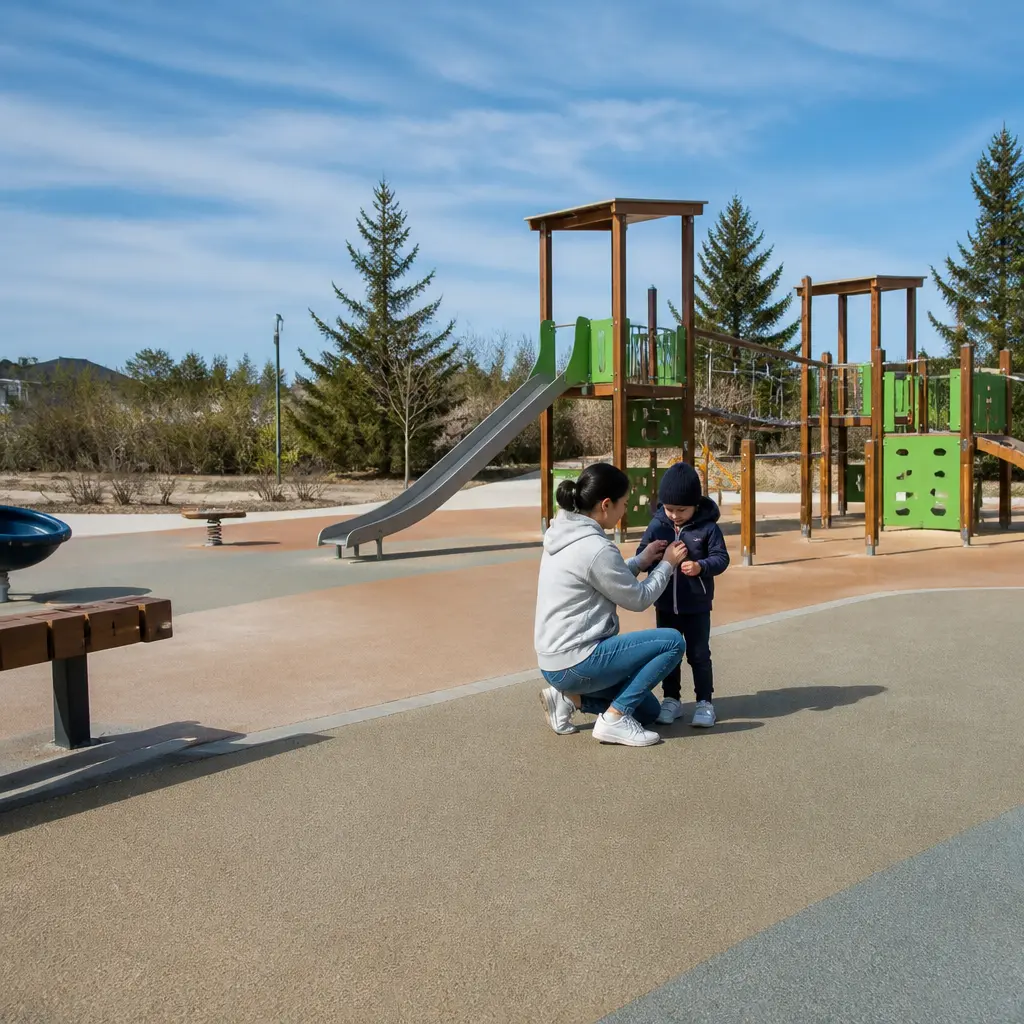
A playground outfit usually includes a flexible top, secure trousers or shorts, socks that stay in place, and well-fitting closed-toe shoes. Reinforced knees, durable stitching, and washable fabrics are useful for crawling, sliding, and repeated contact with outdoor surfaces.
Shoes should bend near the toes, fasten securely, and provide enough traction for the surface without being excessively heavy. The American Academy of Pediatrics recommends properly fitting footwear for children, and caregivers should replace shoes when the sole is worn, the heel slips, or the child’s toes are compressed.
Travel and Childcare Outfits Prioritize Easy Changes
Travel and childcare outfits are designed for quick bathroom changes, spills, naps, and transitions between indoor and outdoor activities. Elastic-waist trousers, two-piece sets, front-opening layers, and spare clothing in a labeled bag can reduce delays and frustration.
Avoid relying on complicated closures when a child will need repeated changes. A practical childcare capsule might include several soft tops, two or three flexible bottoms, one weather layer, spare socks, and an extra complete outfit. This approach also makes it easier to maintain clean, dry clothing during messy sensory play or outdoor exploration.
A Toddler Mobility Outfit Checklist Guides Better Choices
A mobility outfit checklist turns general clothing advice into a quick decision tool. Before dressing a toddler for active play, caregivers can assess fit, movement, safety, weather, and maintenance.
- Can the child squat, walk, reach, and climb without pulling at the garment?
- Does the waistband stay secure without pinching or leaving deep marks?
- Are there loose cords, long ties, detachable decorations, or small unsecured parts?
- Are sleeves, trouser hems, and coat lengths short enough to avoid tripping or snagging?
- Are the fabric weight and number of layers suitable for the temperature and activity level?
- Do the shoes fit securely, bend naturally, and provide appropriate traction?
- Can the child remove or manage some parts of the outfit with reasonable independence?
- Is the clothing clean, dry, intact, and easy to wash after active play?
A simple observational test is often more useful than a label claiming that a garment is “active” or “play ready.” Watch the child move for several minutes in the outfit. Frequent pulling at the waistband, stopping to adjust sleeves, avoiding certain movements, or tripping over hems signals that the garment should be changed.
Conclusion: Toddler Outfit Mobility Encourages Confident Exploration
Toddler outfit mobility combines stretch fabrics, flexible waistbands, breathable layers, sensory comfort, safe closures, appropriate lengths, and weather-ready construction. Running outfits, climbing outfits, crawling clothes, and easy-change childcare basics all serve the same broader goal: allowing children to move confidently while reducing preventable discomfort and hazards.
The World Health Organization’s recommendation for 180 minutes of daily physical activity among children ages 3–4 highlights why comfortable play clothing matters. Parents and caregivers can support that activity by testing movement, removing hazardous cords, checking garment fit, selecting suitable shoes, and adapting layers to the environment. Use the checklist during the next outfit change, observe how the child moves, and consult pediatric safety guidance for additional information about clothing, weather, footwear, and play environments.
Sources: World Health Organization, Guidelines on Physical Activity, Sedentary Behaviour and Sleep for Children Under 5 Years of Age, https://www.who.int/publications/i/item/9789241550536; American Academy of Pediatrics, HealthyChildren.org, Clothing Safety, https://www.healthychildren.org/English/safety-prevention/at-home/Pages/Clothing-Safety.aspx; U.S. Consumer Product Safety Commission, Children’s Upper Outerwear Drawstrings, https://www.cpsc.gov/Business–Manufacturing/Business-Education/Business-Guidance/Childrens-Upper-Outerwear-Drawstrings; Centers for Disease Control and Prevention, Heat and Children, https://www.cdc.gov/niosh/heat-stress/about/heat-and-children.html; American Academy of Pediatrics, HealthyChildren.org, Sun Safety and Protection Tips for Children, https://www.healthychildren.org/English/safety-prevention/at-play/Pages/Sun-Safety.aspx