Baby denim safety means choosing jeans and other denim garments that fit an infant’s body and movement needs, rather than reproducing adult styles at the expense of comfort. Because babies have delicate skin, limited temperature regulation, and rapidly changing proportions, soft fabric, flexible construction, a secure fit, and careful supervision matter more than rigid denim, tight cuts, or decorative details. The U.S. Consumer Product Safety Commission (CPSC) advises caregivers to keep clothing and other potential hazards away from infants’ sleep spaces; for everyday wear, the same practical priority applies: avoid features that can snag, constrict, or irritate. This guide explains the fabric, fit, construction, and care choices that make baby denim safer and more wearable.
Baby Denim Safety Prioritizes Softness and Flexibility
Baby denim safety is the practice of selecting and using denim clothing in ways that support an infant’s comfort, movement, skin health, and supervision. It is not a formal medical or regulatory term with one universal definition. Rather, it brings together garment fit, fabric characteristics, design details, and care. The American Academy of Pediatrics (AAP) recommends dressing babies in clothing appropriate to the environment and avoiding overheating; this makes breathability and suitable layering important considerations when choosing denim.
“Baby denim” includes several related garment types, or hyponyms: denim pull-on pants, overalls, jackets, shorts, and denim-look knit garments. Their safety considerations differ. Overalls and jackets, for example, may have straps, snaps, or hardware, while pull-on pants avoid some fasteners but still need a comfortable waist and leg openings. The garment category should guide the inspection, but softness and freedom of movement should remain the baseline.
Softness and skin comfort
Softness refers to how a fabric feels against the skin and how its seams, labels, and finishes affect comfort. Traditional denim can be stiff because it is woven from sturdy cotton yarns, while washed denim and cotton-rich blends may feel more pliable. A garment’s label does not by itself establish that it is safe or comfortable: caregivers should check the actual fabric, inner seams, waistband, and any rough patches that may rub during crawling or sitting.
The U.S. Centers for Disease Control and Prevention (CDC) notes that infants are more vulnerable to heat-related illness than adults because their bodies regulate temperature less efficiently. Heavy, close-fitting denim can add warmth, so caregivers should consider indoor temperature, weather, and other layers. Choose lighter, softer garments when conditions are warm, and check the baby’s chest or back for signs of overheating rather than relying only on hands and feet.
Flexibility and movement
Flexibility means that clothing moves with the baby rather than resisting normal kicking, bending, crawling, or being carried. Stretch denim may include elastane or another stretch fiber, but a flexible cut and soft construction can matter as much as the fiber blend. A garment should allow the baby to bend both legs comfortably and should not pull tightly across the diaper, knees, or hips.
For infants who are not yet walking, clothing should not interfere with free leg movement or create bunching that makes positioning awkward. For babies who are crawling or beginning to stand, check that hems do not drag or catch underfoot. Soft knit denim-look pants can be a practical alternative when woven denim feels stiff; they provide a similar appearance without requiring adult-style structure.
Fit and Construction Make Baby Denim Safer
A safe fit is secure without being restrictive. Babies grow quickly, so sizing should be based on the garment’s fit on the child, not just the age printed on the label. Tight waistbands can leave marks or press against the abdomen, while oversized legs and long hems can bunch or catch. Check the garment while the baby is seated, lying down, and moving, and reassess fit as the child grows.
Waistbands, seams, and closures
A waistband should sit comfortably without digging into the skin or rolling over. Pull-on designs with a soft, broad waistband can be easier to adjust than rigid button-fly styles. Seams should lie flat, and labels should not scratch. If a closure presses into the baby when sitting or being carried, choose a different design rather than assuming it will soften enough with wear.
Inspect snaps, buttons, rivets, and other small parts before each use. The CPSC’s rules for children’s products address hazards such as small parts and lead in certain children’s products, but caregivers should still stop using a garment if hardware is loose, sharp, broken, or detachable. Avoid adding decorative buttons, pins, or accessories that could come off or create a snagging risk.
Overalls, straps, and decorative details
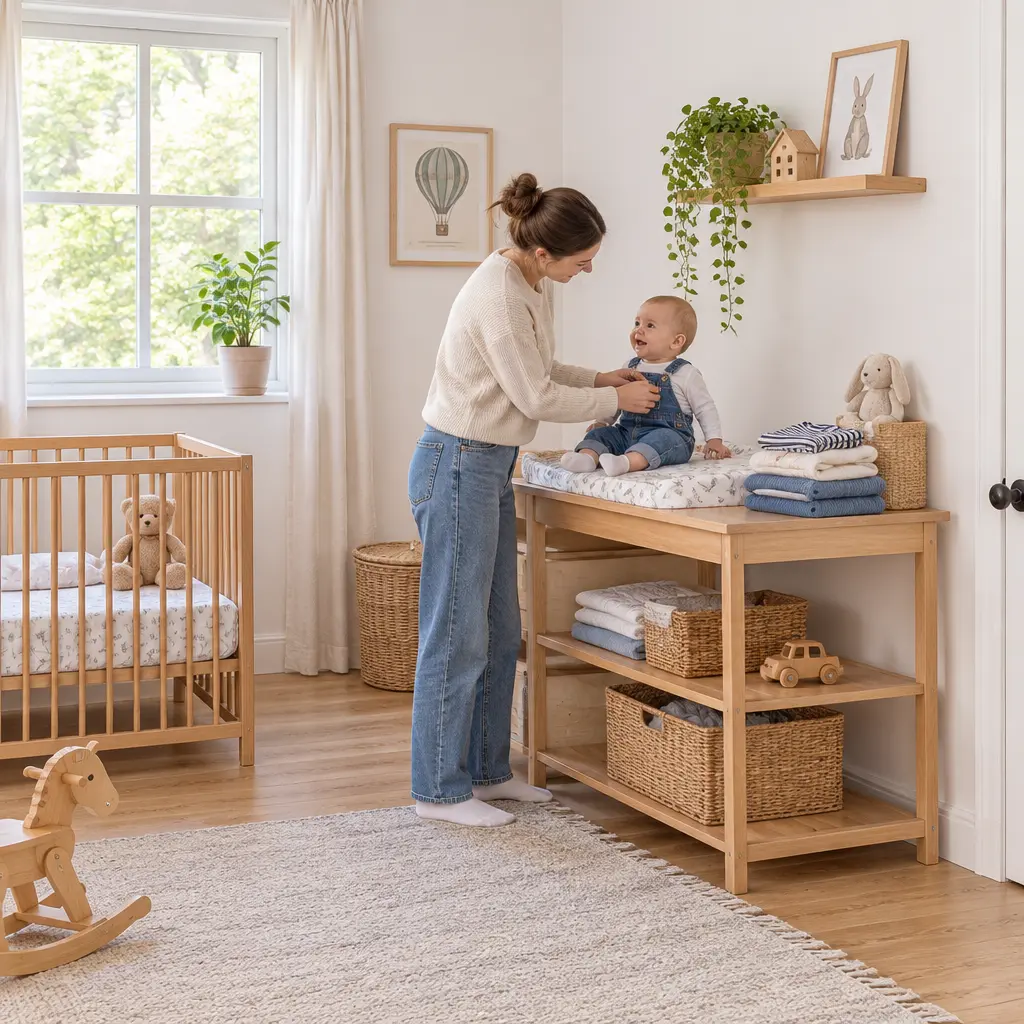
Overalls are denim garments with shoulder straps, and their extra construction calls for a closer check. Straps should lie flat and remain secure without restricting the shoulders or neck. Examine buckles and snaps for sharp edges or loose parts, and make sure the garment does not ride up when the baby sits or is lifted. Pockets, patches, drawstrings, and embellishments should be firmly attached and should not create loops or protruding edges that can catch.
The CPSC’s clothing guidance and children’s-product requirements emphasize reducing foreseeable hazards, but no design feature replaces supervision. Remove denim jackets, overalls, and other extra layers before placing a baby down to sleep, and follow the AAP’s safe-sleep guidance: use a firm, flat sleep surface and keep loose clothing and objects from creating hazards in the sleep area.
Fabric Choice and Care Support Comfort
Fabric choice affects how denim feels, stretches, and retains warmth. Cotton denim is durable, while cotton blends and denim-look knits can offer more stretch or a softer hand. There is no single fiber percentage that guarantees a safe garment; construction, fit, finish, and the infant’s response all matter. When trying a new item, watch for redness or irritation and discontinue use if the garment appears to cause discomfort.
Dyes, finishes, and washing
Washing new clothing before first wear can remove manufacturing residue and soften some fabrics. Follow the care label, use an appropriate detergent, and rinse thoroughly. Avoid applying strong fabric treatments or fragrances if the baby has sensitive skin. If dye transfers onto skin or other clothing, wash the item separately and reconsider using it until the transfer stops.
The Federal Trade Commission’s textile labeling rules require covered garments to disclose fiber content and care instructions, helping consumers compare materials and maintain clothing appropriately. Labels are useful, but they do not replace a hands-on check for rough seams, loose trim, or a fit that restricts movement.
Temperature and layering
Layering means adjusting clothing to the indoor or outdoor environment rather than treating denim as an all-purpose layer. A denim jacket over several other layers may be too warm indoors, while heavy jeans can be uncomfortable in hot conditions. The AAP’s safe-sleep guidance also cautions against overheating during sleep. For sleep, choose sleepwear appropriate to the room and follow current safe-sleep recommendations instead of using ordinary denim clothing as a substitute.
A Practical Baby Denim Safety Check
A brief inspection before dressing helps connect the principles of softness, flexibility, fit, and construction to everyday use:
- Feel the fabric and inner seams for stiffness, scratchiness, or rough labels.
- Check that the waist, legs, and shoulders allow comfortable movement without tight pressure.
- Inspect snaps, buttons, rivets, patches, and trim for looseness, sharp edges, or damage.
- Make sure hems do not drag, bunch excessively, or interfere with crawling and standing.
- Consider the room temperature and the baby’s other layers to avoid overheating.
- Remove extra garments before sleep and follow current safe-sleep guidance.
- Recheck the garment after washing and as the baby grows.
For example, a soft pull-on denim-look pant with a comfortable waistband may be more appropriate for a crawling infant than rigid jeans with a stiff fly and hard hardware. A parent choosing overalls can apply the same reasoning by checking strap adjustment, fasteners, and movement while the baby sits and bends. These are practical comparisons, not claims that one garment type is universally safe for every child.
Conclusion: Choose Baby Comfort Before Adult Style
Baby denim safety is best understood through connected attributes: soft fabric supports skin comfort, flexible construction supports movement, and a secure but nonrestrictive fit reduces avoidable discomfort. Careful inspection of hardware and decorative details, sensible layering, and appropriate washing complete the picture. Adult-style details are optional; a baby’s comfort and ability to move freely are not.
Before buying or dressing a baby in denim, check the fabric, fit, closures, and temperature suitability, then review the garment as the child grows. For broader guidance, consult current CPSC children’s-product safety information and AAP safe-sleep recommendations. A simple rule is to choose the softest, most flexible garment that fits securely and does not interfere with movement or supervision.
Sources: U.S. Consumer Product Safety Commission, Children’s Product Safety, https://www.cpsc.gov/Safety-Education/Safety-Guides/General-Information/Childrens-Products; American Academy of Pediatrics, HealthyChildren.org, How to Dress Your Baby for Sleep, https://www.healthychildren.org/English/ages-stages/baby/sleep/Pages/Dressing-Your-Baby-for-Sleep.aspx; U.S. Centers for Disease Control and Prevention, Heat and Infants and Children, https://www.cdc.gov/heat-health/risk-factors/heat-and-infants-and-children.html; Federal Trade Commission, Threading Your Way Through the Labeling Requirements Under the Textile and Wool Acts, https://www.ftc.gov/business-guidance/resources/threading-your-way-through-labeling-requirements-under-textile-wool-acts