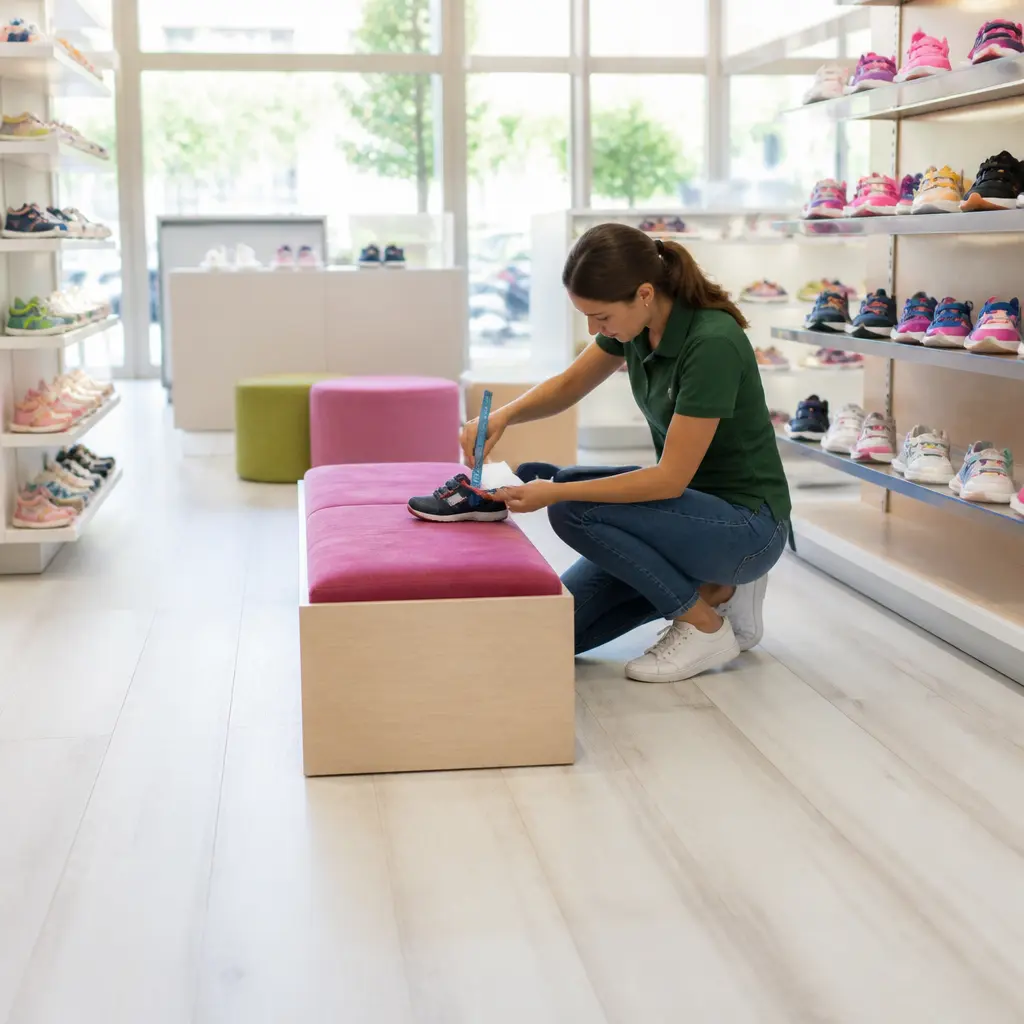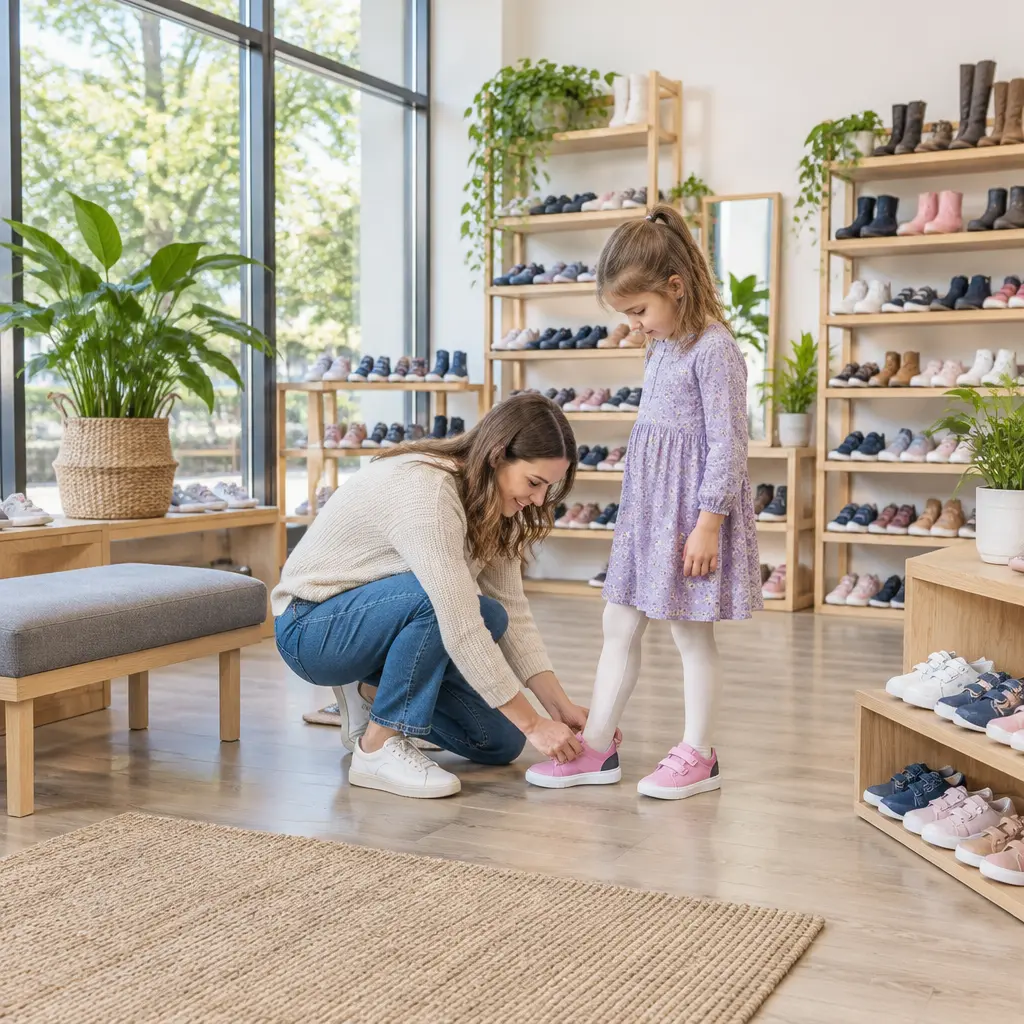
Children’s shoe fit assessment is the process of checking whether footwear matches a child’s current foot length, width, shape, and movement needs. A practical way to monitor growth is to check the space between the longest toe and the front of the shoe, then confirm the fit while the child is standing and walking. Pediatric and footwear guidance commonly recommends roughly 10–12 mm of space for growth and toe movement, but that space is only one part of fit: heel security, width, comfort, and the child’s gait matter too. Because children’s feet grow at different rates, regular checks—more often during infancy and early childhood—can help families spot shoes that have become too small before they cause discomfort or restrict toe movement.
Assessing Children’s Shoe Fit Through Toe-Box Space Checks
A toe-box space check compares the child’s longest toe with the inside front of a shoe that is properly fastened and worn in a standing position. It is a quick screening method, not a diagnosis or a substitute for checking the whole shoe. The American Academy of Pediatrics advises that children’s shoes should fit comfortably and allow room for the toes; guidance from children’s hospitals and podiatry organizations commonly places functional growing room at about 1 cm, with some recommending up to 12 mm. These are practical ranges rather than a universal guarantee, since shoe shape, foot width, and the child’s movement affect fit.
The check is relevant because growth can make a previously suitable shoe tight between scheduled shopping trips. The rate is highly individual: pediatric guidance often describes feet as growing fastest in the first few years, while commonly cited estimates suggest checks every one to three months for toddlers and every three to six months for older children. These intervals should be treated as prompts to inspect, not predictions that every child will outgrow shoes on schedule. This guide explains how to measure toe-box space, recognize other fit problems, track growth, and know when to seek professional advice.
Understanding Toe-Box Space in a Children’s Shoe-Fit Assessment
Toe-box space is the usable room inside the front of a shoe for the toes to rest and move without pressure. The American Academy of Orthopaedic Surgeons describes children’s footwear as needing a proper fit and sufficient toe room; in practical fitting guidance, the relevant measurement is often the distance from the longest toe to the shoe’s interior front. The longest toe is not always the big toe, so assess each foot rather than assuming both feet are identical.
A useful screening target is approximately 10–12 mm of space in front of the longest toe when the child is standing. Too little space can mean the shoe is short; substantially more space can make the shoe unstable, particularly if the heel slips or the child trips. The measurement does not establish a medical threshold: the shoe must also accommodate foot width and depth, hold the heel securely, and feel comfortable during movement.
Measuring Toe Clearance at Home
Toe clearance is the front-to-toe distance inside the shoe. Seat the child, loosen the shoe, place the foot fully inside, and fasten it as it would normally be worn. Have the child stand with weight evenly distributed, because the foot can spread and lengthen under load. Check where the longest toe sits by gently feeling the shoe’s upper or using a removable insole, if the shoe has one. Do not rely only on pressing down on the upper: soft materials can conceal the toe’s actual position.
Measure both feet and use the larger measurement when choosing a size. If using an insole, make sure it belongs to that shoe and is laid flat; compare the child’s standing foot with the insole rather than adding an arbitrary allowance. A paper outline can help track foot length over time, but it does not capture shoe interior shape or width. The American Academy of Pediatrics emphasizes that fit and comfort matter more than a size label, which can vary between brands and styles.
Why Standing Fit and Movement Matter
Standing fit accounts for the natural spreading of the foot under body weight. A check made only while the child is seated can miss pressure that appears when the foot bears weight. After checking clearance, watch the child walk and turn. The shoe should stay on without repeated heel slipping, and the child should not limp, shuffle, or remove it because of discomfort.
Toe-box length is only one dimension. The front should provide enough width and height for the toes to lie naturally, without being squeezed together or pressed against the upper. A pointed or sharply tapered toe can feel tight even when the shoe is long enough. This distinction leads from a simple length check to a whole-shoe assessment.
Checking Related Shoe-Fit Attributes Alongside Toe Space
A complete shoe-fit assessment combines length, width, depth, heel hold, fastening, and observed comfort. The International Association of Paediatric and Adolescent Diabetes and pediatric foot-care guidance emphasize suitable footwear and regular attention to fit; no single toe-gap number can confirm that every feature is appropriate. These related checks help distinguish a shoe that is simply short from one that is too narrow, too loose, or unsuitable in shape.
Width, Toe Shape, and Upper Pressure
Width is the side-to-side room across the forefoot. A shoe can have adequate length but still press on the little toe or squeeze the forefoot. Look for toes that can rest in a relaxed position and an upper that does not leave persistent pressure marks. A broad, rounded toe shape generally provides more natural space than a sharply tapered front, although the best shape depends on the child’s foot.
Check the child’s feet near the end of the day if swelling or activity makes fit vary, and assess both feet because they may differ. A child who repeatedly complains of pressure, has redness that persists after removing shoes, or develops blisters may need a different width or model, not merely a longer size. Persistent pain or unusual foot shape warrants professional assessment rather than repeated size changes alone.
Heel Hold, Fastening, and Shoe Stability
Heel hold describes how securely the shoe remains around the back of the foot. Laces, straps, or hook-and-loop closures should hold the foot without excessive tightness. If the heel repeatedly lifts, the shoe may be too large, too deep, or poorly matched to the foot’s shape. A shoe that is oversized to create extra toe room can compromise stability and is not a reliable way to extend wear.
Have the child walk at a normal pace and observe whether the shoe stays in place. Check that the fastening can be adjusted comfortably and that the child can put on and remove the shoe safely, with age-appropriate help. Socks should be similar to those normally worn with the shoe, since thick socks can change the effective fit.
Comfort, Wear Patterns, and Warning Signs
Comfort is the child’s experience in the shoe during ordinary movement. Ask whether anything pinches, rubs, or feels unstable, but do not depend on verbal feedback alone—young children may not reliably identify or describe pressure. Look for recurring blisters, soreness, unusual reluctance to wear a shoe, or changes in walking. These signs are reasons to inspect fit and, if they persist, consult a pediatrician or podiatrist.
Inspect the shoe itself as well. A collapsed heel counter, damaged fastening, uneven wear, or a sole that has become distorted can affect stability even if the shoe still seems long enough. Normal wear is not by itself proof of a medical problem, but persistent, markedly uneven wear together with pain or a gait change deserves professional attention.
Monitoring Growth Spurts With a Repeatable Fit Routine
Growth monitoring means repeating the same basic checks over time and noting when shoes begin to feel or behave differently. There is no single growth schedule that fits every child. Children’s hospital and pediatric footwear resources commonly suggest checking young children’s shoes every few months, with more frequent attention for infants and toddlers, whose feet may change quickly. A routine check is especially useful after a growth spurt, a change in activity, or a complaint of discomfort.
How Often to Recheck
Use age-based intervals as reminders, then adjust to the child’s growth and the shoe’s condition. For example, a family might inspect a toddler’s fit every one to three months and an older child’s every three to six months, while checking sooner whenever the child reports pressure or the heel begins slipping. These intervals are commonly published guidance, not findings that every child grows at a fixed rate.
Recheck both feet when buying new shoes and periodically during use. Do not wait for a planned calendar date if there are signs of tightness, pain, persistent redness, or a change in walking. Conversely, do not replace a comfortable, well-fitting shoe solely because a size chart predicts a particular age or size.
Keeping a Simple Fit Record
A brief record can make changes easier to notice. Note the date, the child’s standing foot length, the shoe brand and model, the toe-space estimate, and any observations about width, heel movement, or comfort. Since manufacturer sizing varies, recording the actual shoe and fit experience is more informative than recording a size number alone.
- Check both feet while the child is standing, wearing their usual socks.
- Record the longest-toe clearance and note whether the toe box feels broad and deep enough.
- Observe heel hold and walking comfort, not just the child’s shoe-size label.
- Repeat the check after a growth spurt, a footwear change, or any complaint of discomfort.
A simple chart can show the date on the horizontal axis and measured foot length or toe clearance on the vertical axis. The chart is a household tracking aid, not a clinical growth assessment. If measurements seem inconsistent, repeat them using the same method or ask a qualified shoe fitter or health professional to help.
A Practical Example
Suppose a child’s shoes were comfortable at the start of a season, but several weeks later the child begins removing them after outdoor play. A caregiver checks both feet while the child is standing and finds little room in front of the longer foot. The heel also remains secure, but the forefoot feels compressed. This combination suggests the current shoe may be too short or narrow; trying a longer shoe with a suitably broad toe box is more appropriate than buying an oversized shoe and relying on loose fit. If discomfort continues in correctly fitted footwear, the family should seek professional advice.
Choosing Shoes and Knowing When to Seek Help
Choose footwear that fits the child’s current foot rather than buying a much larger size for future growth. The shoe should allow useful toe movement, fit the width and depth of the foot, and remain secure during walking. A flexible, comfortable shoe appropriate to the child’s activity is generally preferable to one selected solely for its size label or appearance. Specialty medical footwear should be chosen with guidance from a clinician when a child has a diagnosed condition.
Seek advice from a pediatrician, podiatrist, or other qualified clinician if a child has persistent foot pain, recurring blisters or sores, swelling, a marked change in gait, or a foot shape that makes ordinary shoes difficult to fit. Children with diabetes, neurological conditions, significant developmental differences, or a history of foot problems may need individualized monitoring. The American Academy of Pediatrics and orthopedic guidance support professional evaluation when symptoms or concerns persist rather than relying on shoe-size adjustments alone.
Conclusion: Make Toe-Box Checks Part of Routine Shoe Care
Toe-box space is a useful early indicator in a children’s shoe-fit assessment, with approximately 10–12 mm often used as a practical growth-and-movement guide. It should always be considered alongside width, toe shape, heel hold, fastening, comfort, and walking stability. Because growth rates vary, repeat checks every few months as a reminder and recheck sooner whenever shoes seem uncomfortable or a child’s movement changes.
Families can make the process more dependable by measuring both feet while standing, recording observations, and choosing shoes that fit now rather than buying far too large. For pain, persistent skin marks, recurring blisters, or gait changes, consult a healthcare professional. Regular, calm fit checks help caregivers respond to growth without treating a single measurement or size label as the whole story.
Sources: American Academy of Pediatrics, “Choosing the Right Shoes for Kids,” https://www.healthychildren.org/English/ages-stages/gradeschool/fitness/Pages/Choosing-the-Right-Shoes.aspx; American Academy of Orthopaedic Surgeons, “Children’s Shoes,” https://orthoinfo.aaos.org/en/staying-healthy/childrens-shoes/; NHS, “Choosing children’s shoes,” https://www.nhs.uk/live-well/healthy-body/choosing-childrens-shoes/; Children’s Hospital of Philadelphia, “Choosing Shoes for Children,” https://www.chop.edu/health-resources/choosing-shoes-children; International Association of Paediatric and Adolescent Diabetes, “Clinical Practice Consensus Guidelines,” https://www.ispad.org/page/ISPADGuidelines